
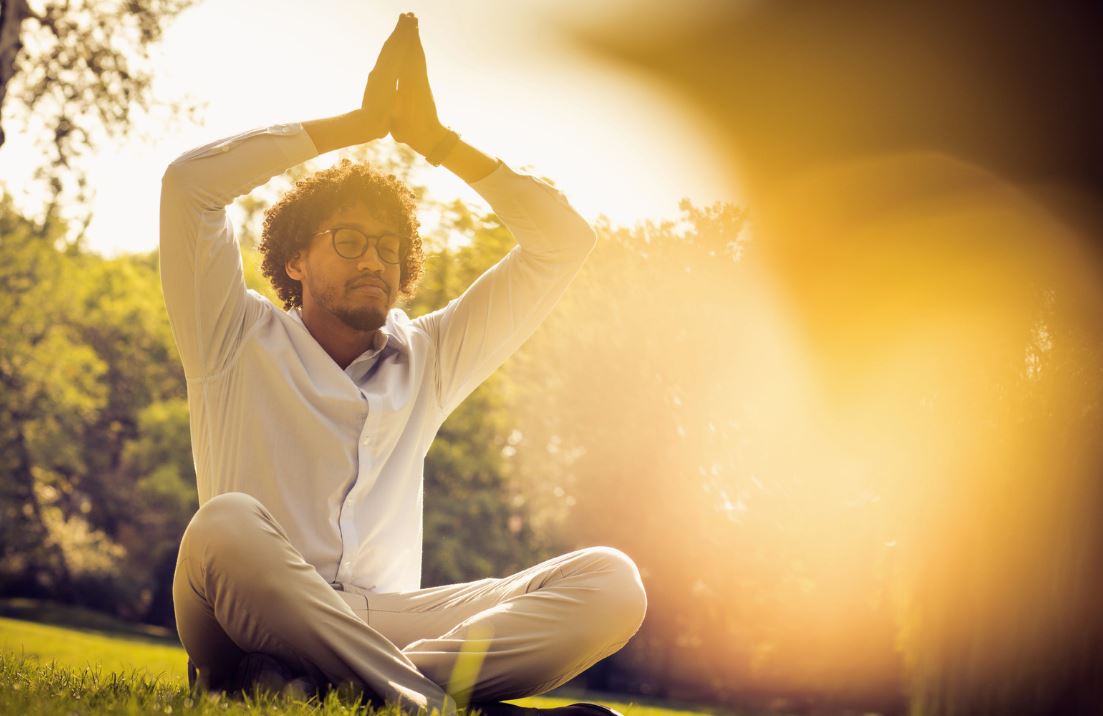
“Grounding” can describe bringing your attention back to the place you are in and the next thing you need to do. In a personal spiritual practice, it may also express a wish for steadiness, connection or time to reflect.
You can explore that meaning while allowing your actual feelings to be present. There is no required sensation, positive mood or length of practice that proves you are grounded.
On this page
Start with what is around you
Pause somewhere you can comfortably pay attention. Notice a few ordinary details: the shape of an object, a colour nearby or a sound in the room. You might also notice the support of your chair or the floor beneath your feet.
Choose the details that feel comfortable. If concentrating on your body or breathing makes you uneasy, keep your attention on something outside yourself instead. You can leave your eyes open.
You do not need to fill your lungs as deeply as possible or control your breathing to complete the exercise. Let breathing remain comfortable and natural, and stop if the practice makes you feel worse.
Let spiritual imagery stay optional
If imagining roots, warm light or a peaceful place fits your beliefs, you can use that image as a personal reminder of steadiness. If pictures do not come easily, a few words or a simple observation may suit you better.
Language about chakras or energy may be meaningful within your spiritual practice. You do not need to interpret an uncomfortable sensation as proof of a blockage or keep going until you feel that something has been cleared.
The NCCIH overview of meditation and mindfulness describes different practices and their limits. A reflective exercise should not replace care for a health concern or make you postpone asking for support.
Choose an accessible connection with nature
You might sit near a window, notice a houseplant or spend a little time in an outdoor space you can comfortably reach. Access to a garden, woodland or long walk is not a requirement.
Notice one detail rather than trying to create a special experience. You could watch leaves moving, look at a patch of sky or listen to a familiar bird. If gratitude or prayer comes naturally, there can be room for it; you do not need to manufacture either feeling.
Keep practical comfort in view. Wear suitable shoes and clothing, consider the weather and choose somewhere that works for your mobility and circumstances. Touching bare ground, hugging a tree or entering water is not necessary for a meaningful pause.
Use movement or sound in a way that fits
Some people prefer an activity to sitting still. You could stretch comfortably, move your hands, listen to a song or hum quietly. Choose what is available and enjoyable rather than a pose or movement you feel obliged to perform.
Music can also offer a moment of expression. It does not have to change your mood or remove a particular energy. You may still feel sad, irritated or uncertain afterwards.
If you share a space, consider other people’s needs too. Headphones, a quieter activity or a different time may make the practice easier to fit into daily life.
End with one practical step
Ask, “What needs my attention now?” The answer might be a meal, rest, a task, a conversation or a request for help. Keep the next step small enough to do in your circumstances.
If a relationship worry prompted the pause, separate what you know from what you are guessing. Grounding cannot establish another person’s intentions, resolve a disagreement or make an unsafe situation safe. Consider what information or individual support you need.
Review the practice by its effect on your day. You can keep it, adjust it or choose something else. If distress persists or interferes with everyday life, qualified support can sit alongside the spiritual practices you value.