

If feng shui is meaningful to you, arranging your bedroom can be a way to reflect on comfort, rest and the kind of home you want to share. You can enjoy that symbolism without treating a lamp, colour or crystal as a promise that love will arrive.
Start with the room you actually have, the people who use it and a budget that feels comfortable. A useful change should make daily life easier rather than create another rule you feel you must get exactly right.
On this page
Understand what the symbolism means to you
Feng shui comes from Chinese traditions concerned with place and arrangement. The Hearst Museum’s account of a feng shui compass describes its connection with arranging space and seeking harmony.
If an object represents connection, balance or a new beginning for you, that meaning can be personal. It does not establish that a particular placement will change another person’s feelings, strengthen a relationship or determine your dreams.
You do not need to buy a special object or follow a countdown to make your bedroom welcoming. Keep the practices you value while judging practical changes by what they do for your comfort.
Arrange the room for comfort and access
Begin with a clear route to the bed, door and anything you need at night. Keep cables, fragile objects and unstable furniture out of the way. A traditional layout suggestion should not take priority over mobility, access or the room’s limitations.
Think about what interrupts rest: glare, noise, an uncomfortable pillow or notifications. The NHS’s sleep guidance suggests a quiet, dark and cool bedroom, adjusted to what works for you.
If your bedroom also serves as an office, you may be able to put work materials away or cover them at the end of the day. A small separation can be more realistic than moving your desk to a room you do not have.

Choose colour, light and objects you enjoy
Pick bedding that feels comfortable and colours you like living with. Red, green or white may carry a meaning for you, but no sheet colour is a dependable way to produce passion or commitment.
Use lighting that suits the activity, then make the room comfortable for sleep. There is no need to leave paired lamps on for hours or repeat a ritual for a set number of days to improve your relationship.
A photograph, small ornament or familiar fabric may be enough to make the room feel personal. You can skip candles, fragrance and diffusers, particularly if anyone finds them uncomfortable. A room does not need a particular scent to be restful or romantic.
Make room for another person through conversation
If you share a bedroom, ask what each of you needs. Storage, temperature, light, sound and bedtime routines may matter more than matching lamps. Agree on changes instead of silently redesigning the space for both of you.
If you live alone, arrange the room for your present life. Leaving an empty drawer can be a hopeful symbol if you enjoy it, but you do not have to reserve space for an imagined partner at the expense of your own needs.
Welcoming a future relationship also involves freely chosen time, communication and mutual interest. Furniture cannot do that work for either person.
Try one manageable change
Choose a change using what you already have: clear a bedside surface, move a distracting work item or adjust an uncomfortable light. Notice whether the room becomes easier to use.
Keep what helps and change what does not. You can respect a spiritual tradition while adapting your surroundings to your actual home and preferences.
If nightmares or sleep difficulties persist or affect daily life, consider suitable healthcare advice. You do not need to solve them by finding a supposedly perfect arrangement.
Read the infographic in text
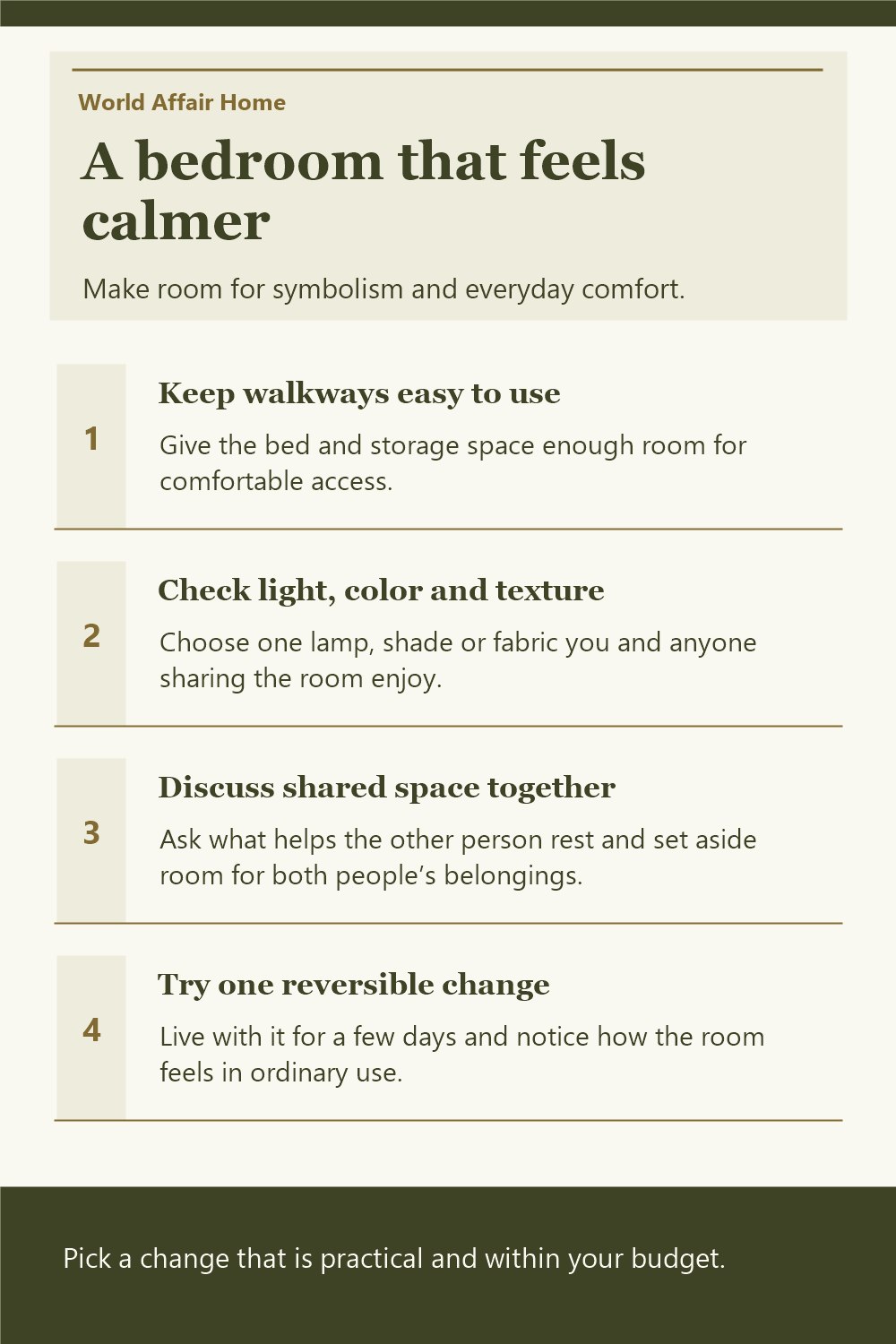
A bedroom that feels calmer
Make room for symbolism and everyday comfort.
- Keep walkways easy to use Give the bed and storage space enough room for comfortable access.
- Check light, color and texture Choose one lamp, shade or fabric you and anyone sharing the room enjoy.
- Discuss shared space together Ask what helps the other person rest and set aside room for both people’s belongings.
- Try one reversible change Live with it for a few days and notice how the room feels in ordinary use.
Pick a change that is practical and within your budget.