

Dating in your thirties can involve a different mix of time, responsibilities and preferences than it once did. It does not follow one schedule. Some people are dating for the first time, some are returning after a breakup and others are deciding whether they want to date at all.
Rather than measuring yourself against an age deadline, plan around the life you have now. Clear preferences, realistic arrangements and honest questions can help you decide which connections are worth exploring.
On this page
Name your priorities without making an ideal-person checklist
Think about the relationship you would like, if any. Are you interested in a committed partnership, casual dating or getting to know people without deciding immediately? You can be clear about a current preference while allowing it to change.
Separate preferences from needs that would shape everyday life. Shared interests may be enjoyable; compatible expectations about commitment, children or where to live may need a more direct conversation. Do not assume that being the same age means wanting the same future.
Your past may inform those priorities, but it does not make you damaged or difficult to love. You can keep a lesson, change a preference or leave an experience private. You do not have to provide a complete relationship history to justify what you want now.
Set a pace that fits your actual availability
Look at your week before accepting plans. Work shifts, caring responsibilities, travel, health needs or a limited budget can affect what is realistic. A short meeting at a convenient time may be more enjoyable than an ambitious plan that leaves you exhausted.
Pressure can come from friends, family or comparisons with other people’s lives. Decide which parts of that conversation you want to engage with. “I am making choices that fit me” may be enough; you do not owe anyone a timetable for a relationship.
You can show interest while setting limits on contact. For example, explain when you are usually available rather than feeling required to reply during work or family time. Notice whether the other person can discuss arrangements without turning availability into a test of affection.

Make dates manageable and mutually chosen
Suggest an activity that gives you room to talk and that both people can comfortably afford and access. Agree on the time and location, and leave room to end the meeting without making another commitment. A date is an opportunity to learn about each other.
If someone is divorced or has children, ask about practical circumstances that affect dating without prying into private details. There may be scheduling limits or responsibilities to consider. Neither a relationship history nor a parental role tells you how considerate someone will be.
If you are a parent, you can keep early dating separate from family routines while you decide what feels appropriate. You do not need to arrange introductions to prove seriousness. Conversations about your children should also respect their privacy.
Ask about compatibility instead of guessing
When a question matters, make it specific. “Are you looking for an exclusive relationship?” or “Would living in different cities work for you?” invites a clearer answer than trying to decode the frequency of messages or the intensity of attraction.
If your preferences differ, you can acknowledge the difference without treating either person as a wasted opportunity. It may be possible to discuss an arrangement, or you may decide not to continue. Avoid agreeing to something you do not want solely to keep the connection.
A gut feeling can prompt you to pause and identify a concern; it cannot establish another person’s motives by itself. Consider their words, their behaviour and your own needs together. Keep privacy and consent in the picture as you seek clarity.
Review the experience without grading your progress
Ask what you learned about the interaction. Could you express a preference? Were plans respected? Did you enjoy the conversation? These questions give you something concrete to consider without requiring a prediction about a lasting partnership.
Keeping an important boundary can be compatible with flexibility about less important details. The love is respect guide to boundaries offers examples. You can be open to someone different from your imagined type while keeping limits around respect, privacy and consent.
You can continue, ask another question or take a break from dating. If someone pressures or frightens you, seek support and consider safety before another conversation. Your thirties do not create an obligation to accept a relationship or hurry a decision.
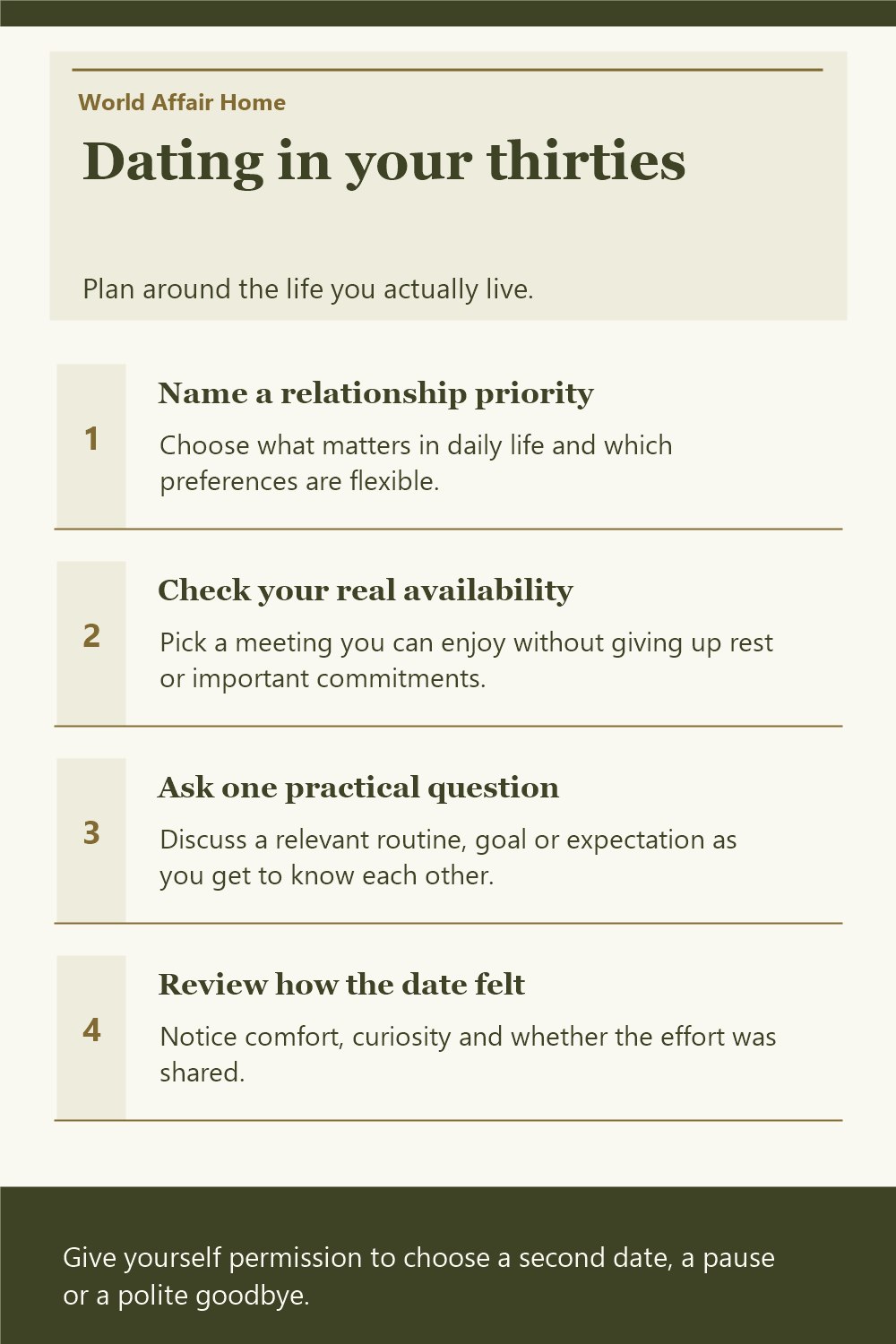
Read the infographic in text
Dating in your thirties
Plan around the life you actually live.
- Name a relationship priority Choose what matters in daily life and which preferences are flexible.
- Check your real availability Pick a meeting you can enjoy without giving up rest or important commitments.
- Ask one practical question Discuss a relevant routine, goal or expectation as you get to know each other.
- Review how the date felt Notice comfort, curiosity and whether the effort was shared.
Give yourself permission to choose a second date, a pause or a polite goodbye.