

A dream about an ex can feel affectionate, upsetting, strange or unexpectedly ordinary. You may wake wondering whether it says something about the past or what you should do next.
You can reflect on the experience without treating it as a requirement to reconnect. A dream does not, by itself, tell you another person’s current feelings, establish that a relationship is right for you or settle a decision about contact.
On this page
- Explore what you want more of today
- Check current relationship concerns against waking events
- Consider everyday reminders
- Treat yourself fairly
- Make room for irritation or other feelings
- Ask what you miss, if anything
- Name the connection you want now
- Let symbols have personal meanings
- Keep apologies and repair separate from dreams
- Write down the feeling without forcing a story
- Choose a next step from your present life
- Settle after waking and get sleep support when needed
Explore what you want more of today
If the dream leaves you with a sense of longing, ask what you would like more of in your present life: companionship, affection, rest, security or something else. You do not have to assume that the ex is the person who should provide it.
Choose one ordinary response to the need you identify. You might contact a friend, make time for an interest or plan a quiet evening. The response can be useful even if you never arrive at a definite interpretation.
Check current relationship concerns against waking events
A dream argument does not prove that something is wrong with a current partner or that either of you is being dishonest. Keep the dream separate from what has actually happened.
If it reminds you of a concern you already have, describe that concern in concrete terms: “We have not had much time together,” rather than, “My dream shows that you do not care.” Ask a question and listen to the response without using the dream as evidence against someone.
Consider everyday reminders
You might notice that you recently heard a song, saw a photograph or spoke with a mutual friend. That can be a personal association worth considering, without proving why this particular dream occurred.
You do not need to search for a hidden trigger if none comes to mind. A brief note may be enough; repeatedly checking old messages or an ex’s social media can leave you with more questions rather than a clearer answer.
Treat yourself fairly
Having a dream is not a failure to move on or a test of your worth. You do not have to feel embarrassed about a familiar person appearing while you sleep.
If the experience starts a harsh inner conversation, make the judgement more specific: “I had an upsetting dream,” rather than, “I will never be okay.” This guide to building self-esteem through fairer responses and manageable actions offers practical ways to respond to self-criticism.
Make room for irritation or other feelings
An unpleasant dream can leave you annoyed, sad or unsettled even when you do not want the old relationship back. Notice the feeling without assigning it to a particular person or event.
If another concern comes to mind, consider it on its own merits. You do not have to conclude that a coworker, friend or current partner must be causing the dream, or confront them about an interpretation they cannot verify.
Ask what you miss, if anything
You may miss part of the relationship, a familiar routine or the future you once imagined. You may also find that you do not miss the person at all. Leave room for either answer.
Missing a good part does not erase the reasons the relationship ended. If you are considering contact, think about what you want from it and whether contact would respect both people’s wishes. An ex’s request for distance still matters after a meaningful dream.
Name the connection you want now
An intimate dream does not create a duty to pursue sex, romance or contact with anyone. You can ask what kind of closeness you would actually welcome while awake.
That might mean affection in a current relationship, friendship, conversation or simply more time with supportive people. Discuss a real need if you choose to, without assuming that the dream supplies a diagnosis of what is missing or a promise about who can meet it.
Let symbols have personal meanings
A wedding, a baby or a shared home in a dream does not, by itself, confirm an upcoming event. Ask what the image brings to mind for you instead of applying a fixed equation such as “a baby always means creativity.”
The NIH explanation of dreaming notes that scientists are not sure why we dream. If dream imagery has spiritual meaning for you, you can include that in your reflection while keeping practical decisions grounded in your circumstances and other people’s choices.
Keep apologies and repair separate from dreams
Dreaming that you apologized, forgave someone or received an apology does not establish that a real-life repair has happened. It may give you a question to consider about what still matters to you.
If you decide that a real apology is appropriate, take responsibility for a specific action and respect whether the person wants contact. You do not have to reopen communication because a dream felt unfinished, and forgiveness does not require returning to a relationship.

Write down the feeling without forcing a story
If writing helps, make a short note of what you remember and how you felt on waking. You might add what has been on your mind recently, leaving space for uncertainty.
You do not need a complete explanation for every detail. Stop if the exercise becomes repetitive, frightening or another way to criticize yourself. You can keep the note private, return to it later or decide that you have given it enough attention.
Choose a next step from your present life
A dream about separating again does not prove that you have completed healing, just as a dream about reuniting does not mean you should return. Look at your present wishes, circumstances and boundaries.
If you are considering a reunion, this guide to conversations before getting back with an ex focuses on actual choices, accountability and practical arrangements. You can also choose no action and let the dream remain an experience you had.
Settle after waking and get sleep support when needed
After an upsetting dream, give yourself a moment to notice where you are and what is around you. You can write a brief note, return to a calming routine or wait until daylight before deciding whether you want to think about it further.
If regular nightmares affect your sleep and everyday life, seek help from a qualified healthcare professional. The NHS guidance on nightmares also suggests a relaxing bedtime routine and a sleep diary.
You can care for the effect the dream had on you without needing to solve its meaning tonight.
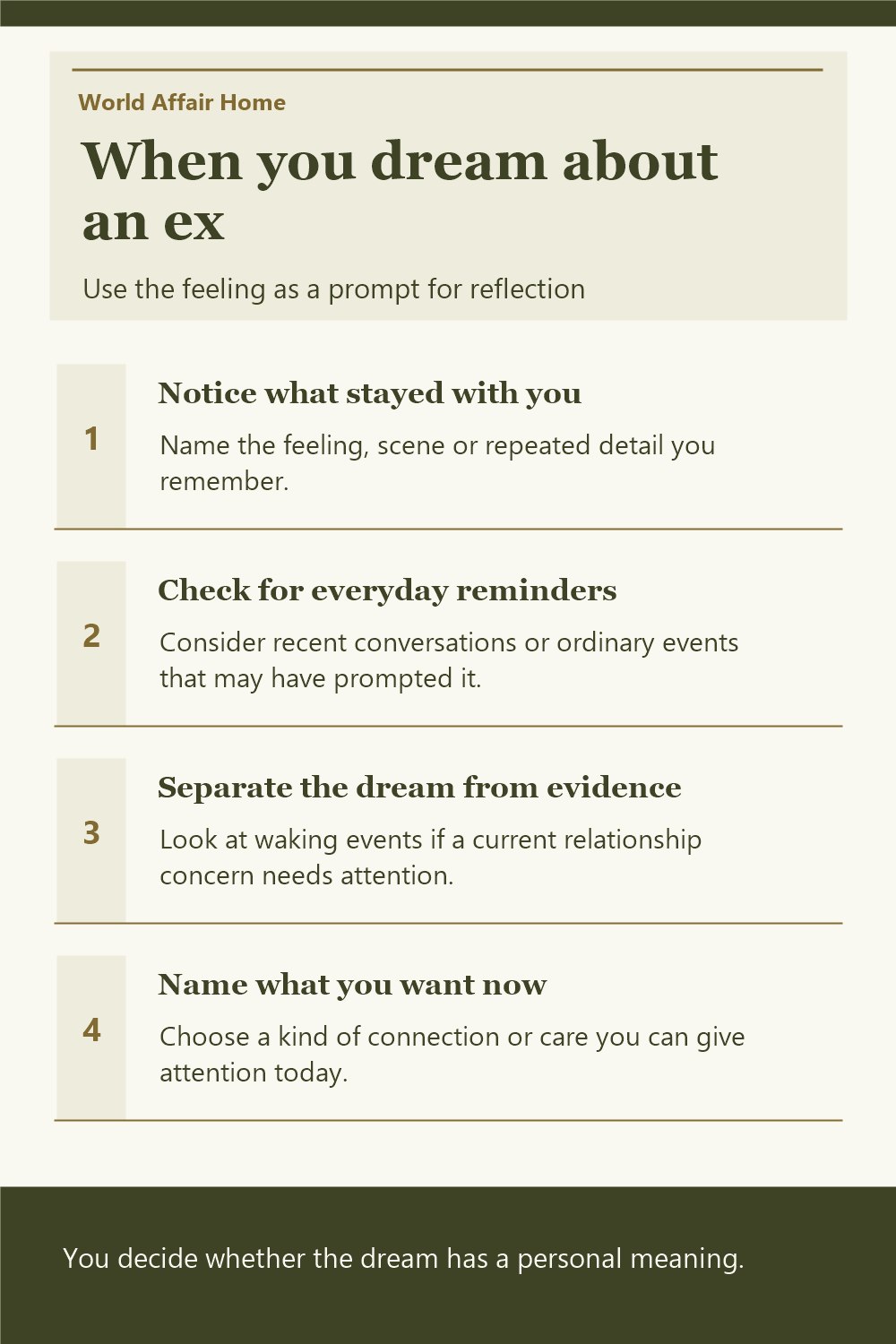
Read the infographic in text
When you dream about an ex
Use the feeling as a prompt for reflection
- Notice what stayed with you Name the feeling, scene or repeated detail you remember.
- Check for everyday reminders Consider recent conversations or ordinary events that may have prompted it.
- Separate the dream from evidence Look at waking events if a current relationship concern needs attention.
- Name what you want now Choose a kind of connection or care you can give attention today.
You decide whether the dream has a personal meaning.