

Some former partners become friends; others prefer distance or contact limited to practical matters. There is no single arrangement that proves a breakup was healthy or that either person has moved on.
Before trying friendship, discuss what it would mean to each of you. These six conversations can help you choose an arrangement that fits your needs, with room for either person to pause or decline.
On this page
Make room for two different answers
Ask whether you both want friendship now. One person may value staying in touch while the other needs distance. A shared history does not require matching answers.
Be honest if what you really want is another romantic relationship. Friendship should not become a way to wait for, persuade or monitor someone who has declined romance. If both people are considering a reunion, treat that as a separate conversation about getting back with an ex.
You might say, “I would like to stay on friendly terms, but I understand if you do not want personal contact.” Leave room for the answer rather than repeatedly reopening the request.
Choose a manageable amount of contact
There is no universal waiting period. Consider how you each feel before, during and after contact, rather than following a fixed number of days.
You may prefer a brief hello at group events, an occasional message, limited practical contact or a period without personal contact. Discuss what is manageable now instead of assuming you can immediately keep the same level of closeness.
If you share responsibilities, personal distance may still include necessary communication. Agree which topics need a reply and which conversations you are not ready to have. You can review the arrangement later without promising that it will become a close friendship.

Be clear about what friendship includes
Old habits can create different expectations. Talk about invitations, late-night messages, affection, overnight visits, favours and money if those situations are relevant.
Use specific language: “I am comfortable talking at group events, but I do not want late-night personal messages,” or, “Please ask before sharing a photo of us.” You can set a limit on your own participation without trying to control the other person’s life.
Physical contact also needs to be welcome now; previous intimacy does not establish present consent. If an interaction starts to feel ambiguous, pause and ask rather than relying on what used to be normal.
Discuss feelings and privacy around new relationships
Learning that an ex is dating someone else may bring up feelings you did not expect. Notice what you need, such as fewer updates or a pause in contact, without treating the feeling as proof that anyone has done something wrong.
Neither person owes the other access to dating details, messages or location information. Avoid asking mutual friends to report back or using friendship to keep checking who someone sees.
If you begin a new relationship, discuss relevant expectations openly with that partner. Respect everyone’s privacy when sharing personal information. You can acknowledge a concern without making another person responsible for managing all of your feelings.
Separate practical responsibilities from friendship
Co-parenting, shared work, property, finances or caring for a pet may require communication. You can aim for clear, courteous arrangements without also agreeing to emotional closeness.
Keep practical messages focused on what needs to be decided. Where helpful and safe, use an agreed channel, a clear schedule or a written summary of an arrangement. Do not use children to carry messages or ask them for information about an ex’s personal life.
For legal or financial questions, get advice appropriate to your circumstances. Friendship alone is not a substitute for understanding a shared responsibility or formal agreement.
Keep the option to pause or stop
Ask whether either person can change the arrangement without pressure or punishment. A workable friendship leaves room for a no, a slower pace and changing needs.
You can say, “I need a break from personal contact. I will still respond to the necessary housing messages through the channel we agreed.” You do not need to list every hurt or debate whether your reason is good enough.
If contact includes threats, coercion, stalking or repeated unwanted messages, seek individual safety support rather than trying to prove that you can be friends. Love is respect’s boundary guidance emphasizes being able to express limits without fear.
Choose the next arrangement you can both freely accept. Friendship, limited contact and distance can each be reasonable choices; none needs to become a test of maturity or how much the past relationship mattered.
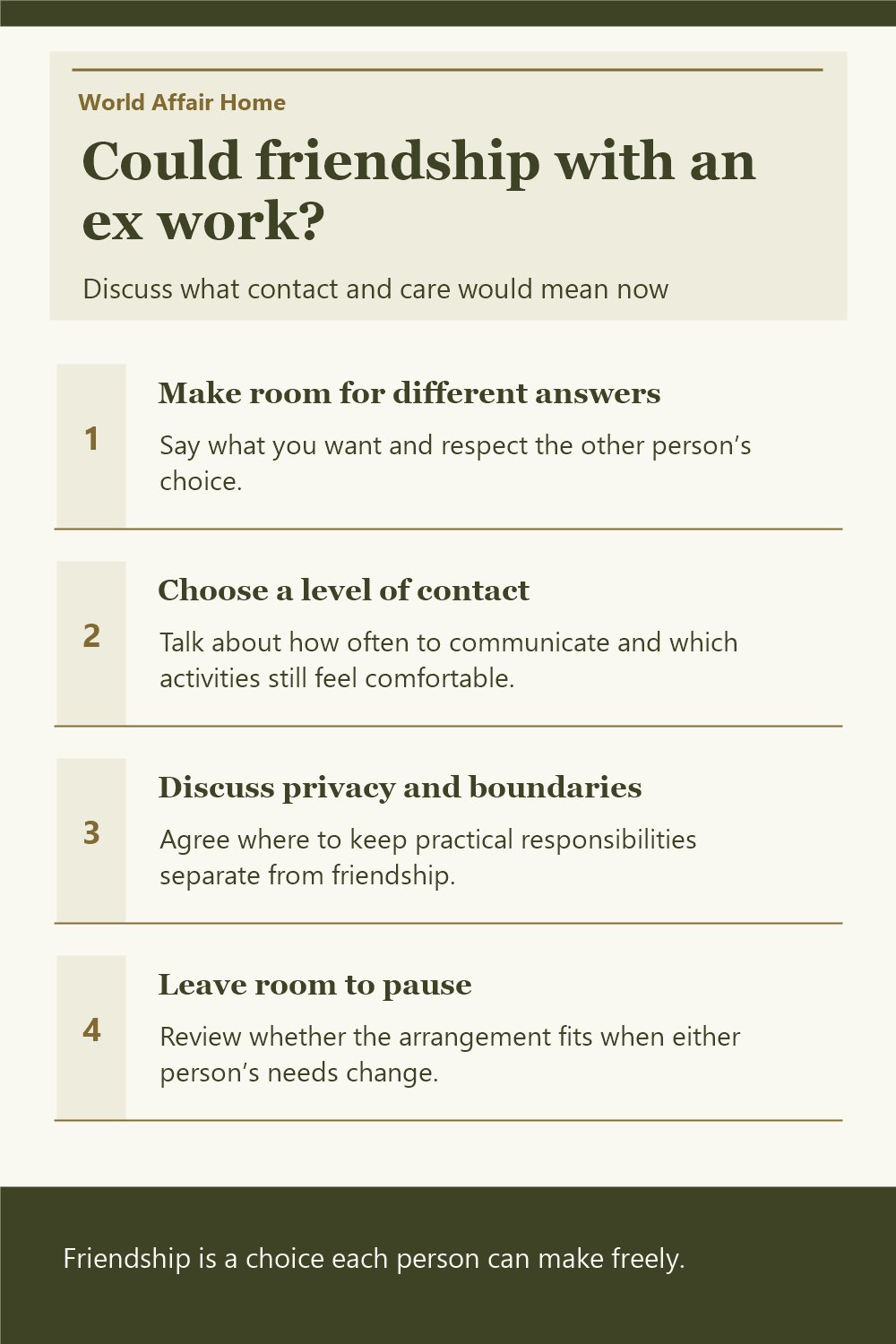
Read the infographic in text
Could friendship with an ex work?
Discuss what contact and care would mean now
- Make room for different answers Say what you want and respect the other person’s choice.
- Choose a level of contact Talk about how often to communicate and which activities still feel comfortable.
- Discuss privacy and boundaries Agree where to keep practical responsibilities separate from friendship.
- Leave room to pause Review whether the arrangement fits when either person’s needs change.
Friendship is a choice each person can make freely.