

Letting go of someone who does not want the same relationship can be painful, even when you understand that continuing to hope is costing you. You may miss the person, the routine or the future you imagined. Those feelings deserve care.
Start with what you know about the relationship and what you need next. You do not have to stop loving someone before making a decision about contact, commitment or your own wellbeing. Moving forward can involve practical arrangements and support as well as time to feel the loss.
On this page
Work with what you actually know
A delayed message or a different way of showing affection does not, by itself, prove what someone feels. Consider their words, your agreements and the pattern over time. Have they clearly said they do not want a relationship? Are they offering a different kind of connection from the one you want?
If someone has said no or ended the relationship, respect that answer. Repeated persuasion, gifts or checking their activities will not create mutual agreement. You can take their decision seriously while recognising that it hurts.
When the situation is unclear and a conversation feels safe, you might ask once what they are willing to offer: “I want a committed relationship. Is that something you want with me?” You can then decide whether their answer and actions meet your needs. You do not need to prove that they feel nothing before choosing to step away from an arrangement that does not work for you.
Make a contact plan that fits your life
Consider which contact is necessary and which keeps you waiting for a different outcome. A pause from personal conversations or social-media updates may give you some space. You can mute updates, put reminders out of immediate view or ask friends to stop passing on news about the person.
There is no single contact rule for every situation. Shared parenting, housing, work or belongings may require communication. Where it is safe and appropriate, keep those exchanges focused on the practical issue and use an agreed channel. Get suitable local advice if shared responsibilities are complicated.
You might say: “I need a break from personal messages. Please use email about collecting your things.” This is an example to adapt to your circumstances. You do not have to negotiate friendship while you are still deciding what contact you can manage.
If you fear threats, stalking or retaliation, seek confidential help with safety planning. Love is respect’s guidance on ending a relationship explains why safety can change how and when a person leaves. A private meeting or final confrontation may be unsafe. Consider a safer device when looking for help if your communications may be monitored.

Give feelings room and care for your day
You may feel sadness, anger, relief, longing or several things in the same day. Missing someone does not mean you have to resume the relationship. Nor does having a better afternoon mean that you should be finished grieving.
The NHS guidance on grief and loss includes the end of a relationship and recognises that people respond differently. You do not have to follow a fixed sequence or compare your pace with someone else’s.
Keep the immediate day manageable. Arrange something to eat, protect time for rest and choose one necessary task. Ask a trusted person for a specific kind of help, such as company on a walk or a call after a difficult appointment. You can say whether you want listening, practical help or a distraction.
Keep closure from depending on another reply
It is understandable to want a clear explanation or an apology. The other person may not provide one, and another conversation may leave the same questions unanswered. Consider what you can decide from the information you already have.
A private note can help separate two things: what you wish had happened and what you are choosing now. For example: “I wanted us to build a future together. They have said they do not want that. I am choosing less contact while I adjust.” Keep any notes somewhere private if that is important for your safety.
You can put photographs or messages out of daily view without making every decision about them immediately. If there has been threatening or harassing contact, avoid automatically deleting messages that you may need when seeking support or reporting what happened. A specialist advocate can help you consider safer arrangements.
Ask for support and choose your next step
Let someone know what this period is like for you. A friend, family member, community contact or qualified counsellor may offer support. If distress persists, worsens or makes everyday life difficult, consider speaking with a health professional.
You can rebuild activities and connections without making dating your next project. If you later want to meet someone, choose a pace that feels workable and be honest about what you are ready for. A new relationship is not required to validate the decision to leave an unreciprocated one.
For now, choose one useful step: clarify a necessary arrangement, mute an upsetting feed or ask someone to spend time with you. Letting go can be a series of choices made while feelings are still present. You deserve respect and support throughout that process.
Read the infographic in text
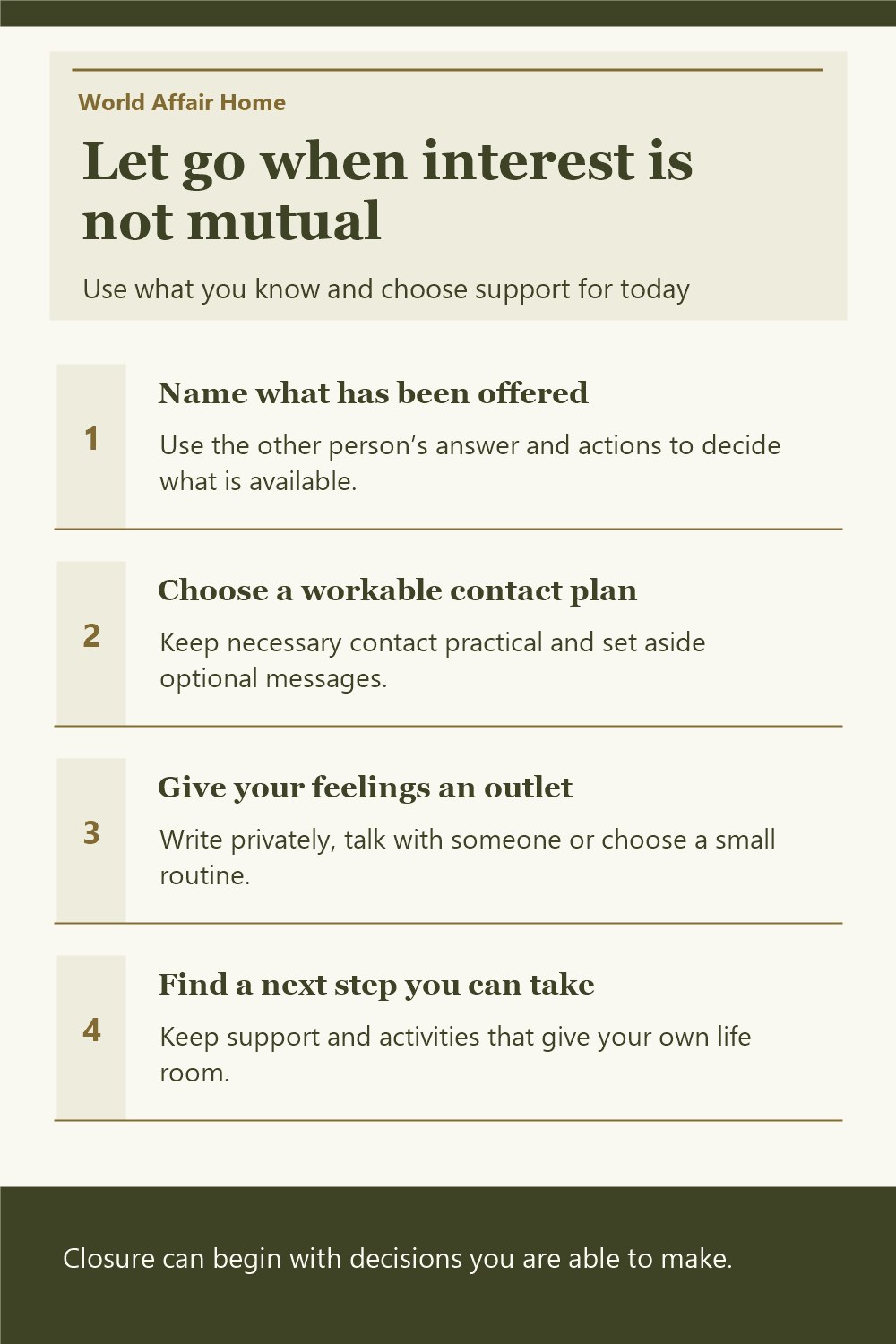
Let go when interest is not mutual
Use what you know and choose support for today
- Name what has been offered Use the other person’s answer and actions to decide what is available.
- Choose a workable contact plan Keep necessary contact practical and set aside optional messages.
- Give your feelings an outlet Write privately, talk with someone or choose a small routine.
- Find a next step you can take Keep support and activities that give your own life room.
Closure can begin with decisions you are able to make.