

Care often appears in ordinary actions: remembering a preference, sharing a responsibility or making time to listen. A gesture can be meaningful without proving what another person feels or guaranteeing that a relationship is healthy.
If you want to show care, start with what the other person welcomes and what you can freely offer. These ideas are invitations to discuss, rather than a checklist either person must complete to earn love. Words still matter when you need to clarify intentions, consent or an agreement.
On this page
16 everyday ways to show care
- Ask before choosing the help. “Would you like company, a listening ear or help with the errand?” gives someone room to say what they need. Your preferred way of helping may not fit the moment.
- Take responsibility for a shared task. If you agree to handle dinner, include the planning and clearing up that the arrangement requires. Doing an occasional disliked chore should not conceal an unfair everyday division of work.
- Remember an ordinary preference. You might offer their preferred seat or remember that they like a quiet morning. Check when a preference changes; remembering a detail does not give you permission to decide for them.
- Choose a thoughtful gesture within your means. A note, a favourite snack or a repaired item may be welcome. Gifts are optional, need not be expensive and do not create an obligation to forgive, offer affection or return the favour.
- Make room for their interests. Ask about a project or listen to what they enjoyed in a book. You can be curious without pretending to share every hobby or making their achievement about your own support.
- Protect time for other connections. Respect plans with friends, family or a community that matters to them. Choosing an evening apart does not mean either person values the relationship less.
- Make a plan you can keep. Suggest a realistic time together and take part in arranging it. If circumstances change, explain promptly and discuss another option rather than relying on a large promise about the future.
- Agree on attention during shared time. You might put aside distracting browsing for a conversation. Devices may also provide accessibility, care or work support, so ask what arrangement helps instead of imposing a rule about phones.
- Keep contact welcome. A message about something that made you think of them can be kind. Notice the contact they actually want; repeated messages or an expectation of immediate replies can create pressure.
- Check how they are feeling. “You seem quieter; would you like to talk?” leaves room for an answer. No one should have to detect every subtle change or read a partner’s mind to demonstrate care.
- Offer support with an honest limit. “I can collect the prescription after work” is clearer than promising to be available at any moment. If you cannot help, say so; do not make yourself someone else’s only possible support.
- Ask about affection. A hug, a hand to hold or sitting nearby may be welcome, or the person may prefer space. Respect an answer of no without treating it as a test of their love.
- Encourage a goal without taking control. Ask whether feedback or practical help would be useful. You can discuss costs and shared responsibilities while leaving room for the other person’s choices and a different view.
- Celebrate in a way they enjoy. Some people like public congratulations; others prefer a private message. Ask before sharing their news, photograph or personal details with friends or on social media.
- Take responsibility when you cause hurt. Name the action, listen to its effect and make a realistic change. An apology does not require the other person to forgive quickly or feel reassured immediately.
- Follow up on an agreement. Ask whether the practical change helped and what needs adjusting. Repeated consideration can be more useful than adding another gesture while the original concern remains unaddressed.

Ask what feels helpful to each of you
Choose one idea that fits an actual need. You might say, “I would like us to have more relaxed time together. Would a walk on Sunday suit you?” or “When I am upset, please ask before offering advice.” Then listen to what the other person would welcome too.
The Mental Health Foundation’s relationship guidance emphasises boundaries, listening and accommodating each other’s needs. It also recognises the importance of understanding your own feelings and expressing them.
Leave room for an alternative. Work, health, money and caring responsibilities can affect what either person can offer. A smaller arrangement freely chosen by both people is more useful than agreeing to an impossible expectation to avoid disappointment.
If you are trying to understand your own feelings before making a declaration, Do You Love Someone? Feelings, Care and an Honest Next Step explores what you know, what remains uncertain and how to choose words that match your intentions.
Consider the relationship beyond its gestures
A gift, smile or affectionate evening cannot settle every question about the relationship. Consider whether you can speak honestly, decline a request, maintain privacy and discuss a concern without being humiliated or frightened.
Our guide to everyday relationship patterns and mutual choice looks at reliability, respect and repair over time. Use the observed behaviour alongside a direct conversation when it is safe, rather than trying to decode an isolated gesture.
Where trust has been damaged, practical care does not replace accountability or give someone a right to rush reconciliation. Likewise, you do not have to stay in a relationship because the person has done kind things. Affection and compatibility can be different questions.
If there are threats, coercion or fear of retaliation, seek private support from a local domestic abuse service or trusted person, using a safer way to communicate if needed. You do not need to decide what someone secretly feels before taking safety seriously.
For an ordinary relationship conversation, start with one action you would welcome and one you can realistically offer. Care can include honest limits, a respectful refusal and following through on what you both choose.
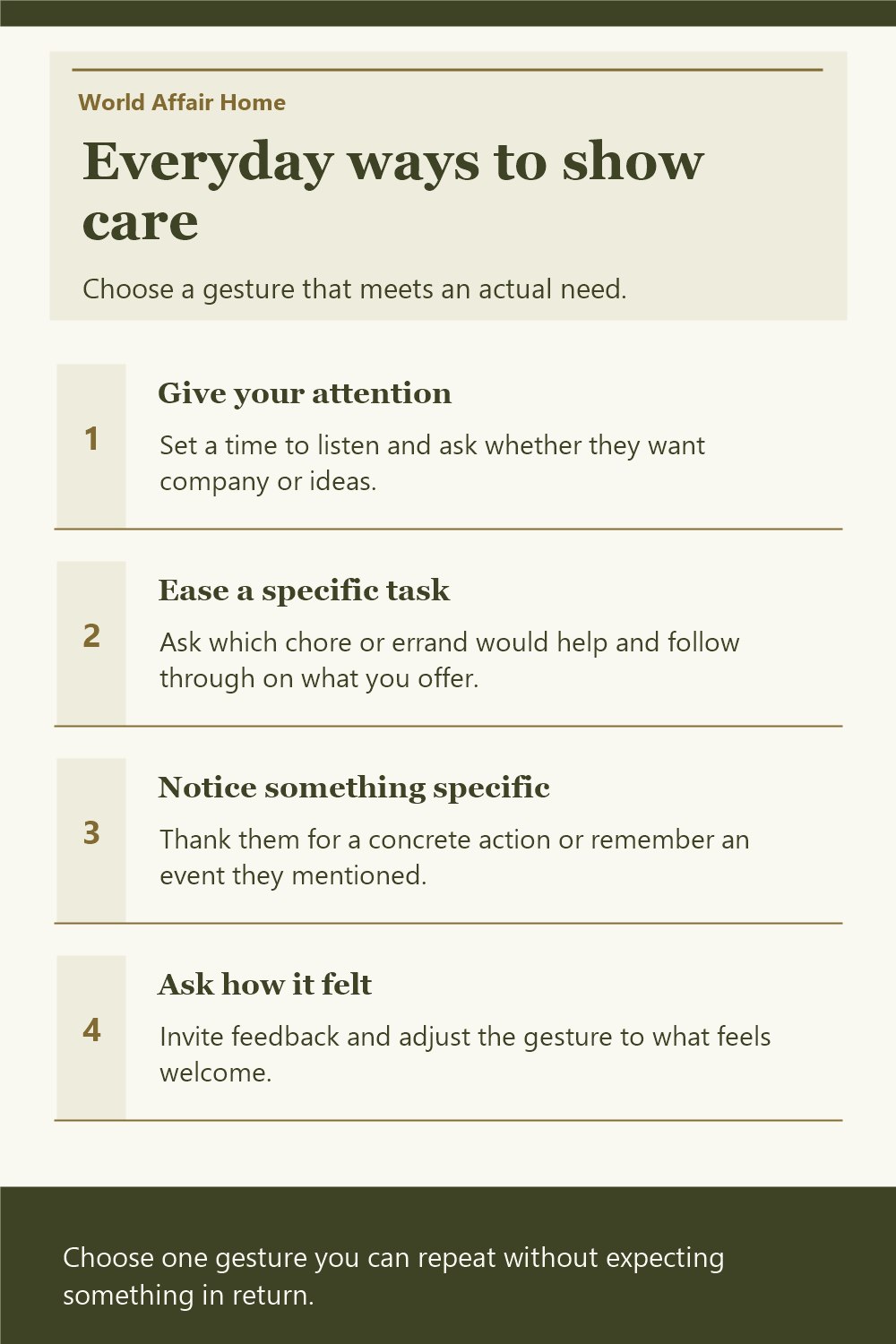
Read the infographic in text
Everyday ways to show care
Choose a gesture that meets an actual need.
- Give your attention Set a time to listen and ask whether they want company or ideas.
- Ease a specific task Ask which chore or errand would help and follow through on what you offer.
- Notice something specific Thank them for a concrete action or remember an event they mentioned.
- Ask how it felt Invite feedback and adjust the gesture to what feels welcome.
Choose one gesture you can repeat without expecting something in return.