

The end of a relationship can change your routines, friendships, living arrangements and plans. You may feel unsure what you want next, even if ending the relationship was your choice.
Finding yourself again does not require a dramatic reinvention or a quick return to who you were before. Begin with what would make everyday life a little more manageable, then leave room to discover what you want to keep or change.
On this page
- Start with the next manageable part of the day
- Sort practical needs from decisions that can wait
- Choose contact and digital boundaries that fit your situation
- Reconnect with people in small, specific ways
- Try a preference that belongs to you
- Leave room for mixed feelings
- Make one future goal small enough to begin
- Ask for more support when you need it
Start with the next manageable part of the day
When everything feels like a large task, choose one ordinary need: something to eat, a drink of water, clean clothes, rest or a little fresh air if that suits you. A familiar routine can give you a place to begin without requiring a full new schedule.
Lower the effort where you can. An easy meal, a reminder or help with shopping may be more useful than an ambitious plan. Ask a trusted person for a specific kind of help if it is available.
Choose a step that fits your energy and circumstances. You do not have to turn coping into another performance.
Sort practical needs from decisions that can wait
Write down what needs attention soon: housing, bills, belongings, work, caring responsibilities or appointments. Separate urgent tasks from ideas about what the rest of your life should look like.
Choose one task and identify the next action, such as finding a document or asking which service handles a question. If it feels overwhelming, work for a short period or ask someone to sit with you while you make a call.
Get qualified local advice for legal or financial decisions that affect you. Avoid signing, transferring or cancelling something just to get through an emotionally difficult conversation.
Choose contact and digital boundaries that fit your situation
Consider what contact with your ex is useful or necessary and what leaves you feeling unsettled. You may want space from personal conversations, while still needing to discuss children, work, a pet or shared practical arrangements.
Where it is safe and workable, agree on a channel, the topics you need to cover and realistic response times. Children should not have to carry messages between adults.
Think about social media, shared photo reminders and access to your own accounts. You can mute updates or ask friends not to pass along news. If you fear monitoring or retaliation, get safety advice before changing digital arrangements; a simple password change may not address every risk.
Reconnect with people in small, specific ways
Choose someone you feel comfortable contacting. You might say, “I have been quiet since the breakup. Do you have time for a short call this week?” You can ask for company without wanting advice or a detailed discussion.
Friends and family differ in what they can offer. If one person is unavailable or unhelpful, consider another source of connection: a familiar group, an accessible community activity or individual support.
You do not need a busy social calendar to prove that you have moved on. One manageable conversation can be enough for today.

Try a preference that belongs to you
Ask what you would enjoy without needing to impress anyone: music, cooking something familiar, reading, making something, spending time outdoors or returning to an interest you have missed.
Try a small version before committing money or a large amount of time. Notice whether the activity interests you now, rather than assuming you must enjoy everything you liked years ago.
Your preferences may have changed during the relationship. You can keep meaningful parts of that time while making new choices.
Leave room for mixed feelings
Relief, sadness, anger, affection and uncertainty can coexist. Missing someone does not automatically mean you should reunite, and feeling better for a day does not mean you must be finished grieving.
The NHS guidance on grief and loss includes the end of a relationship and notes that people’s responses differ. You do not have to follow a fixed sequence or deadline.
If reflection helps, write a few lines about what you need or what felt difficult today. If it becomes repetitive or overwhelming, pause and turn to something practical or ask for support.
Make one future goal small enough to begin
Choose something that matters to you, such as feeling more connected, learning a skill or making your home easier to manage. Then identify one action within your current resources.
For example, “have more friendships” could begin with inviting one person for a walk. “Return to studying” could begin with finding the entry requirements, without committing to a course today.
You can change your goals as you learn more about what you need. There is no requirement to start dating, forgive your ex or make a public announcement about a new chapter.
Ask for more support when you need it
If distress is making daily life hard to manage, or what you are trying is not helping, speak with a qualified healthcare professional or counsellor about the support available to you.
If the breakup involves threats, coercion or unwanted contact, consider a specialist abuse-support service. If you feel unable to keep yourself safe, seek urgent local crisis or emergency support.
Your next step can be modest: send one message, make one meal or handle one practical task. Choose something that supports the life you want to have, without demanding that you feel a particular way first.
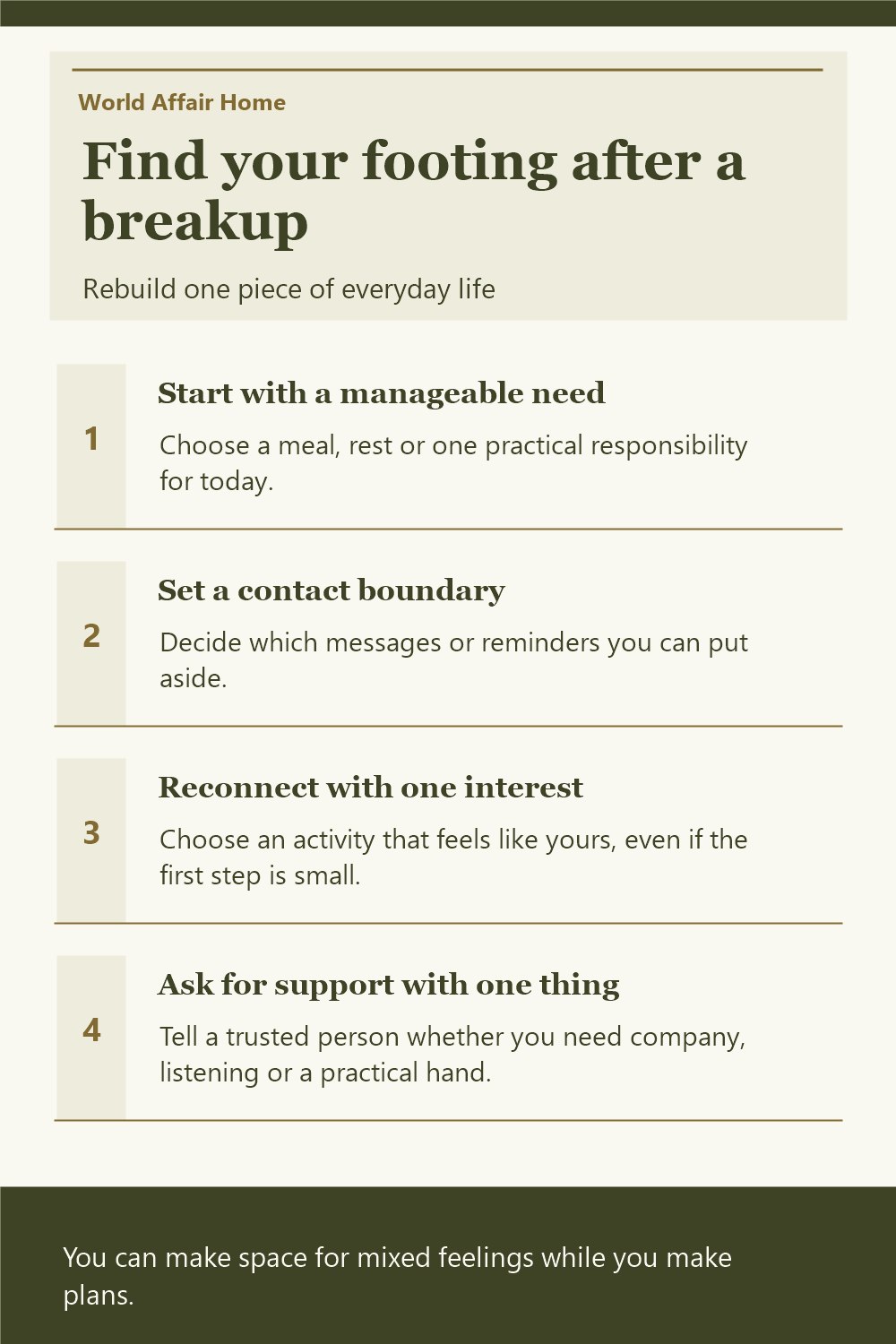
Read the infographic in text
Find your footing after a breakup
Rebuild one piece of everyday life
- Start with a manageable need Choose a meal, rest or one practical responsibility for today.
- Set a contact boundary Decide which messages or reminders you can put aside.
- Reconnect with one interest Choose an activity that feels like yours, even if the first step is small.
- Ask for support with one thing Tell a trusted person whether you need company, listening or a practical hand.
You can make space for mixed feelings while you make plans.