

People can show love through everyday behaviour: listening, making plans, offering care and taking responsibility when something goes wrong. Those actions matter, but no single gesture proves what someone feels or guarantees a healthy relationship.
Look at patterns over time and whether the relationship leaves room for both people’s needs and choices. These eight behaviours can help you think about care in practice. They are not a scorecard, and you do not need to put someone through tests to find out where you stand.
On this page
1. Listening with interest
A caring response makes room for what you are saying. Someone might ask a question, remember a concern or check they understood you. Listening is not determined by gender, and it does not have to look like constant eye contact or an immediate emotional response.
Notice whether you can finish a thought and return to a concern that matters. A person can need time to process a conversation while still treating it seriously. If you keep feeling unheard, describe the specific change you need rather than trying to infer their feelings from one interaction.

2. Making workable plans
Care can appear in the effort to make a plan that works for both people. That could mean finding a manageable time to meet, sharing an important task or telling you promptly when something changes. Grand promises are less useful when ordinary agreements keep being ignored.
Reliability does not mean being available every minute or never making a mistake. Consider how changes are handled and whether the effort is mutual. “I cannot do Friday; would Sunday work?” gives you something clearer than repeated reassurance without a plan.
3. Respecting a no
You can decline a date, a sexual activity, a request or a conversation you are not ready to have. A caring person may feel disappointed, but disappointment does not justify pressure, threats or punishment. Consent and boundaries do not become less important when someone says they love you.
Compromise can help with a shared decision, such as where to spend an evening. It should not require giving up safety or your right to choose. A partner does not need to “fight for you” by continuing contact after you have clearly asked them to stop.
4. Allowing privacy and choice
Closeness can include sharing feelings, but you get to decide what to share and when. You do not have to reveal every private thought, password or painful experience to demonstrate trust. A slower pace does not automatically mean someone lacks love.
When trust has been damaged, discuss what information and agreements are relevant to the problem. Avoid treating unlimited surveillance as the only way to feel secure. You can ask for clarity about the relationship without surrendering all privacy or expecting your partner to do so.
5. Offering practical care
Care often looks ordinary: asking what would help when you are unwell, sharing a household responsibility or remembering something important to you. It need not involve expensive gifts, constant praise or pretending every difficult day is easy.
Support also has limits. Someone can care about you and need rest, work time or help themselves. Look for willingness to discuss a fair arrangement. One person always putting their own needs last can become an unequal pattern rather than proof of deeper love.
6. Supporting your interests
A partner can take an interest in what matters to you without sharing every hobby or ambition. They might ask about your project, celebrate something you are pleased with or respect the time you need for an activity.
You do not have to perform, win or look a certain way to deserve consideration. Support can include an honest question about a plan, but it should leave room for your decisions. Compare the effect of encouragement with repeated belittling disguised as “helping you improve.”
7. Taking responsibility
Disagreement is not proof of love. What matters is how people respond when there is a problem: can they address the issue without intimidation, listen to its impact and take responsibility for their part? An apology becomes more meaningful when behaviour changes afterwards.
You can pause a heated discussion. You do not have to accept insults or aggression as evidence that someone is emotionally invested. Better Relationship Communication: Small Starts, Clear Requests and Follow-Through offers ways to make a specific request when it is safe to talk.
8. Respecting your wider life
A relationship can matter deeply while leaving room for friends, family, work, beliefs and time alone. Respect does not require liking everyone you know or agreeing with every family expectation. It does require room for you to maintain connections and make choices without being controlled.
Healthdirect’s guide to healthy relationships discusses respect, communication and support, and distinguishes these from controlling or abusive behaviour. A loving label does not make harmful treatment acceptable.
If you are unsure where you stand, ask about intentions and expectations when it is safe, then consider the answer alongside the person’s actions. You may discover mutual care, an incompatibility or a need for clearer boundaries. You are allowed to decide a relationship does not meet your needs even if affection is present.
If you feel afraid, threatened or controlled, seek individual support from someone you trust or a local domestic-abuse service. You do not need to settle whether the person “really loves you” before taking your safety seriously.
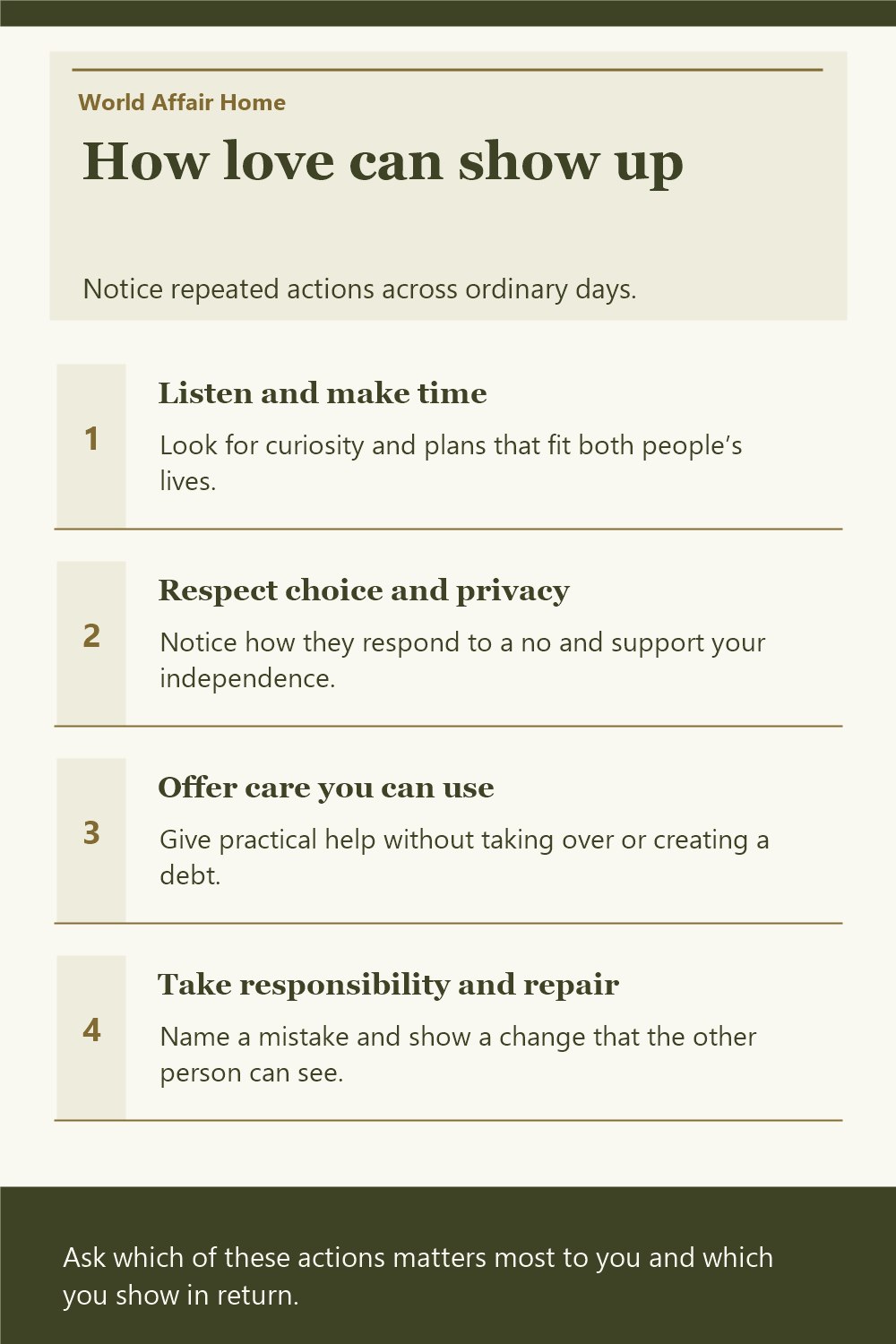
Read the infographic in text
How love can show up
Notice repeated actions across ordinary days.
- Listen and make time Look for curiosity and plans that fit both people’s lives.
- Respect choice and privacy Notice how they respond to a no and support your independence.
- Offer care you can use Give practical help without taking over or creating a debt.
- Take responsibility and repair Name a mistake and show a change that the other person can see.
Ask which of these actions matters most to you and which you show in return.