

Trust after an affair needs more than a promise and more than access to a phone. The betrayed partner may need facts, honest answers and time to observe whether commitments are being kept.
Moving beyond constant surveillance does not mean ignoring deception or rushing forgiveness. It means finding relevant ways to assess accountability without making one partner a permanent investigator. Staying, separating and reconsidering later remain choices.
Build accountability around the actual concern
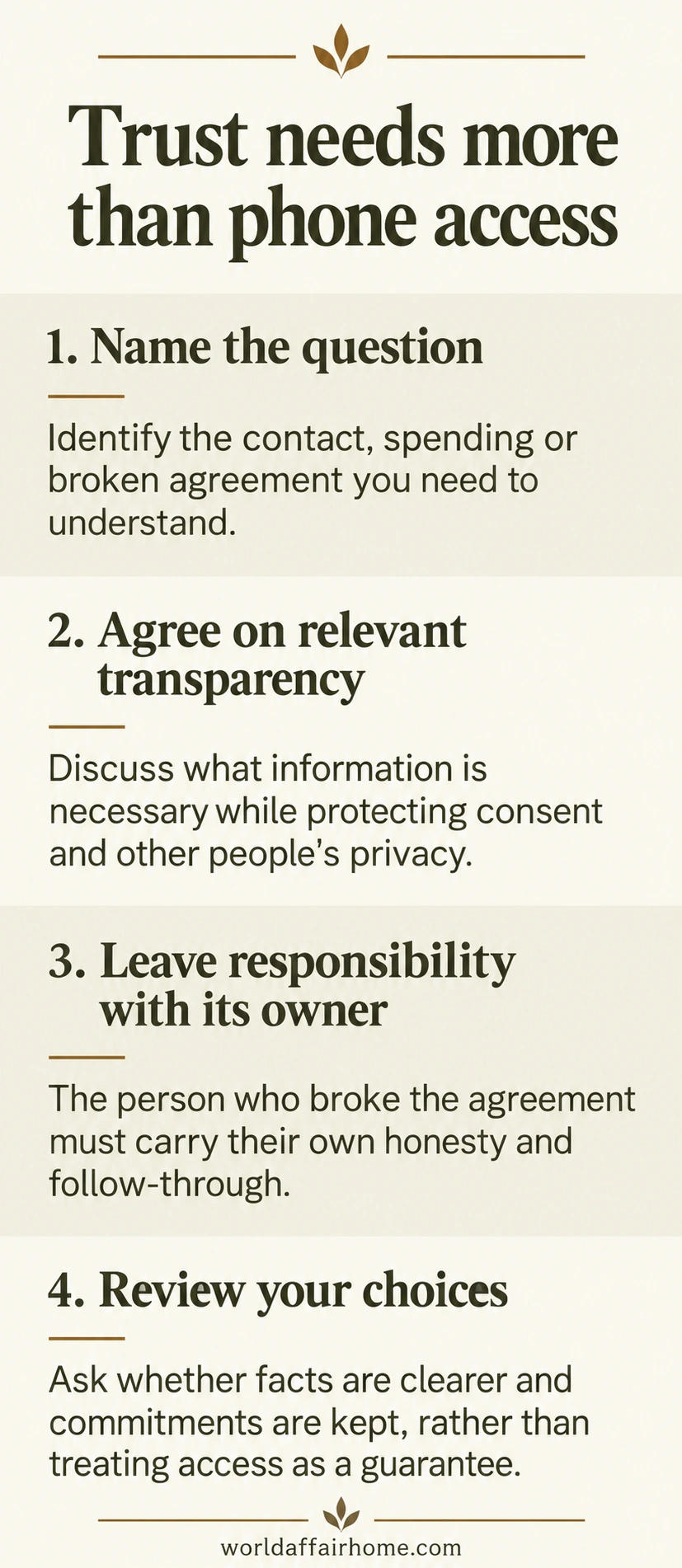
Read the guide as text
- Name the question. Identify the contact, spending or broken agreement you need to understand.
- Agree on relevant transparency. Discuss what information is necessary while protecting consent and other people’s privacy.
- Leave responsibility with its owner. The person who broke the agreement must carry their own honesty and follow-through.
- Review your choices. Ask whether facts are clearer and commitments are kept, rather than treating access as a guarantee.
Say What You Want to Know
Before checking, find out what questions you need answered. Is there ongoing contact with the other person, and have they used shared funds? Has a boundary been broken, or are you just wanting total certainty that no information can give you?
A good question, such as "Has there been contact with that person since Friday?" is different from looking at every device until you feel calm. The first gives you information, and the second has no real stopping point.
Write down your question, then ask what evidence would be relevant and what decision the answer would cause. This helps us separate a need for facts from a need for reassurance.
You don't have to solve the problem alone, and there are qualified therapists who can help you deal with difficult conversations if everything is safe. Individual support can also help you know what information you need for your own decision-making.
Responsibility vs. Honesty
The person who had the affair is responsible for the choices they made and for being truthful about what matters to the repair. The partner who was betrayed shouldn't have to look at every inconsistency before honesty is given.
Look for their initiatives, such as acknowledging broken agreements, answering questions, disclosing contact, and following through on their commitments. Even though these behaviors don't guarantee a good outcome, they do give better information than telling you to just move on.
There is no single disclosure arrangement that fits every couple. Discuss what information is relevant to the decisions you are making.
Dealing with relationship hardships might need more attention later, but they don't get rid of their responsibility to the person who was betrayed by the affair. They might wonder what caused the disconnect and what the problem was, but it doesn't make deception something they caused or could have prevented by monitoring the situation better.
Allow for Transparency
Transparency is better when it answers questions and is clear. If shared money was used, look at how it affected the financial records together when appropriate. If contact is continuing through work, talk about how the contact will be handled and communicated.
Don't treat unrestricted access to every account as the only evidence of their commitment. Devices have certain information about friends, clients, coworkers, and children who don't agree to be part of the recovery.
A relevant agreement might cover disclosing further contact with the other person and reviewing any shared spending involved. The terms depend on the circumstances.
Ask what arrangements need to be established, who can access what, and when it will be looked at. If one person cannot disagree freely, the arrangement may be controlling rather than a voluntary agreement.
Privacy Vs. Secrecy
Privacy includes having a conversation with a friend, receiving medical care, or having a counseling session. Secrecy can mean hiding behavior that violates agreements and commitments. The difference depends on the content, not whether something is private.
An affair doesn't make every future private thought or message suspicious. Privacy shouldn't become a way to avoid talking about deception or ongoing contact.
Love is respect offers guidance on boundaries, including the right to discuss expectations rather than assume agreement. These boundaries deserve explicit discussion rather than assumptions.
Find out what information is necessary to make a good decision about your relationship and what information belongs to another person or is no longer helpful. You might disagree about the answer. Talking about the disagreement is better than thinking that total access or total refusal settles the situation.
Asking the Right Questions
Questions might come to you as you figure out what happened, and this doesn't mean that you're failing to recover. Conversations can be harder when they start unexpectedly during childcare, work, or late nights of exhaustion.
If safety is there and it's mutually accepted, pick a time to ask questions. Write down your concerns when they come up so you don't have to rely on your memory to ask them. Keep your urgent health or safety issues outside of the rules about waiting.

Scheduling a conversation does not give the person who had the affair permission to avoid reasonable questions. This should make the discussion more reliable, with enough time and willingness for them to answer the questions.
You can find out if they're willing to talk to you. You can tell them you have questions you want to talk about later. You don't have to resolve the questions while you're driving. Having structure can protect attention without minimizing the issue or trying to keep your stress hidden for a better time.
Take a Moment Before Checking on Your Partner
After discovering an affair, it's understandable that you might feel the urge to check your partner's messages, ask where they've been, or look for signs that something is happening again. When those feelings come up, try taking a moment to think about what caused them. Did your partner change plans unexpectedly, take longer than usual to respond to a message, or do something that reminded you of the affair? Or have you actually discovered new information that doesn't add up? Understanding what's making you uncomfortable can help you decide what to do next.
One thing that might help is writing down three simple things: what happened, what you're afraid it means, and what you need from your partner. For example, if your partner comes home late from a meeting, that's what happened. Thinking that the affair might have started again is what you're afraid it means. What you might actually need is an honest explanation about why their plans have changed.
Taking a little time to think doesn't mean you shouldn't ask questions or expect honesty from your partner. Rebuilding trust after an affair requires open communication and consistent behavior. But giving yourself a moment before reacting can help you decide whether you need reassurance, a conversation, or more information instead of automatically checking the same things over and over.
If you find yourself constantly checking on your partner and it's beginning to affect your sleep, daily routine, or emotional well-being, talking with a counselor or another mental health professional might help. Getting support doesn't mean you're ignoring the betrayal or pretending that what happened wasn't serious. It simply gives you another way to manage the stress while you figure out whether your partner's current actions are helping rebuild the trust that was broken.
Picking Commitments in Everyday Life
Pick commitments that can be seen in your regular life. These can involve updates when plans change, honest discussions of contact, and shared financial decisions.
Do not make the betrayed partner responsible for creating, tracking and reminding the other person about every commitment. Ownership matters, and an agreement should include what the person responsible is going to do if they make a mistake or they're not able to follow through.
For example, the person who had the affair might say, "If necessary work contact happens, I will tell you when we have privacy that day and answer your questions." This is more specific than simply asking to be trusted.
Look at the patterns instead of thinking there's going to be a perfect performance to prove moral changes. A forgotten grocery item and a hidden meeting are different kinds of event; assess the relevant behavior without treating every mistake as the same breach. Relevant accountability needs judgment about their behavior, how it affects you, and whether the response is honest and reasonable.
Don’t Look for Guarantees
No partner can prove that they'll never betray you again. Repeated promises might feel comforting, but they leave questions unchanged. Trust means living with some uncertainty but still deciding whether the evidence in front of you is enough to continue the relationship.
You can ask your partner to reassure you without thinking this is proof. Ask them to remind you of what you agreed about contact, and this can help you arrange a plan. It doesn't mean you need to stop observing whether the agreement is followed.
The person who had an affair can respond with patience and give you specific answers instead of being frustrated by your need for reassurance. The betrayed partner can consider whether reassurance gives useful information or only brief relief from uncertainty.
There's no certain timetable for becoming confident with your partner. Pressure to feel better on a schedule can cause other forms of hiding, where you hide your stress to pretend that the recovery is actually working, even if it's not.
Make Sure You Feel Safe First
If your partner threatens you, tries to stop you from leaving, damages property, or attempts to control you after an affair is discovered, it's important to get support right away. Conversations about infidelity can bring up strong emotions, and an already tense situation can become dangerous. You don't have to explain everything that's happening in your relationship to ask for help.
If you're not in immediate danger, pick a time to talk when you both feel ready. You might say, "I know enough about what happened to feel hurt and upset. I need some time to rest tonight without talking about it anymore. We can decide when to have another conversation tomorrow." Taking a break doesn't mean you're ignoring the affair or agreeing to move past it. It simply gives you time to collect your thoughts.
Avoid having serious conversations about the affair while driving, taking care of other responsibilities, or being somewhere you can't easily leave. If either person has been drinking or using other substances, it's better to wait until you're both able to have a clear conversation. Just because something feels urgent doesn't mean you have to discuss it immediately, especially if you don't feel safe.
If you're in danger, contact local emergency services when it's safe to do so. If your partner's behavior involves threats, intimidation, or control, a domestic violence advocate can also help you understand your options.
Take Care of Yourself While Processing the Betrayal
Finding out that your partner has been unfaithful can leave you feeling overwhelmed, exhausted, or unsure about what to do next. You don't need to have a perfect self-care routine, but taking care of your basic needs is important. Try to drink some water, eat something, take your regular medications, and get some rest. If having someone you trust nearby makes you feel more comfortable, don't hesitate to ask.
For example, imagine that you discover your partner's affair the night before an important work presentation. Instead of feeling like you have to decide whether to end your marriage that night, you might ask a close friend to bring you breakfast or help you figure out whether you can take a day off. Right now, the most important thing might simply be getting through the next day.
Try not to rely on alcohol or other substances to help you sleep or avoid the emotions you're experiencing. If the stress of the affair is affecting your sleep, appetite, work, or everyday life, talking with a healthcare professional might help. You don't have to wait until everything feels completely out of control before reaching out for support.
Sometimes taking care of yourself involves simple things, like eating a favorite meal, taking a warm shower, or going for a walk with someone you trust. These small activities won't erase the pain of betrayal, but they can help you feel a little more grounded while you begin processing what happened. You don't have to figure out how to rebuild trust or make a decision about your relationship all at once.
Reach Out for Support Without Giving Up Control
When you're trying to deal with the pain of an affair, having someone you trust to talk to can make a big difference. Try reaching out to one or two people who will listen without pressuring you to stay or leave the relationship. You can even explain what kind of support you need by saying something like, "I really need someone to talk to right now, but I don't want you contacting my partner or telling anyone else what's happening." This allows you to set boundaries while still getting the emotional support you need.
You also don't have to tell everyone about the affair or share every detail of what happened. Sometimes involving too many friends or family members can make things more complicated, especially if you eventually decide to work on rebuilding trust with your partner. But you shouldn't feel like you have to keep everything a secret just to protect your partner's reputation. There's a difference between wanting privacy and feeling pressured to stay silent about something that's hurting you. You deserve to have people you can turn to when things get difficult.
It can also help to have different people you rely on for different kinds of support. Maybe you have a close friend who listens when you need to talk, a family member who can help with everyday responsibilities, or a professional who can answer questions about finances, legal concerns, or your emotional well-being. You don't have to expect one person to understand everything or have all the answers.
Remember that getting support doesn't mean you're allowing someone else to make decisions about your relationship. Whether you decide to rebuild trust after the affair or eventually move on, that decision should be yours. Having people who care about you can make the process easier without taking away your ability to decide what's right for your future.
Looking at the Arrangement
Pick a time to ask if the current plan is helping you make better decisions. Are the questions being answered, are commitments being followed, and is there any new kind of deception?
If the plan isn't working, adding a tracking tool won’t address the problem. You might need to have better conversations, get different professional support, or set better boundaries.
Consider lessening access when you want to. Keep the accountability relevant and know that there's no rule that a review has to end with less access or more trust.
The aim is a relationship you can assess through reliable behavior and clear choices. You deserve enough information to decide, enough privacy to remain a person, and enough freedom to leave if repair is not the future you want.
Outline an accountability conversation
Choose one area for a specific, freely discussed agreement. The outline does not predict whether trust will return.
If raising concerns leads to threats, fear or retaliation, seek private support before a joint discussion.
Use the questions and examples in the article above; the draft builder needs JavaScript.
15 questions readers ask
1. Can trust return without shared passwords?
It may, but no arrangement guarantees repair. Relevant honesty, initiative and consistent behavior matter more than one device rule.
2. Does privacy mean secrecy?
No. Private conversations or healthcare can coexist with honesty. Hiding behavior that breaks agreements is a different concern.
3. Am I wrong to want answers?
No. Wanting relevant information after deception is understandable. You should not be rushed into trust or forgiveness.
4. How can I identify what I need to know?
Write the specific question and how its answer affects your decision. Separate a factual gap from a search for certainty no record can provide.
5. Is secret tracking a reasonable repair tool?
Secret tracking and unauthorized access can violate privacy, create risk and have legal consequences. They are not substitutes for voluntary accountability.
6. What about other people's information on a phone?
Messages may contain friends', clients', coworkers' or children's private information. Discuss relevant disclosure without assuming unlimited access is appropriate.
7. Who should manage the repair commitments?
The person responsible for a commitment should own it. The betrayed partner should not have to supervise every act of honesty.
8. What if work contact with the other person continues?
Discuss what contact is necessary, what boundaries apply and how relevant contact will be disclosed. Assess whether the agreement is realistic and followed.
9. Should all questions wait for a planned discussion?
No. A planned time can help attention, but urgent health or safety concerns should not be delayed to protect a meeting rule.
10. What can I do when I want to check again?
Pause to identify the trigger, the fact you know and the information you need. Seek support if checking is disrupting sleep or daily life.
11. How long should rebuilding trust take?
There is no universal timetable. Pressure to feel better by a deadline is not evidence that repair is working.
12. Can therapy guarantee we stay together?
No. Appropriate therapy can support understanding and choices. It cannot guarantee honesty, reconciliation or a particular outcome.
13. What if I am afraid to ask questions?
Threats, intimidation and control call for private specialist support. Do not rely on a joint conversation format to make an unsafe situation safe.
14. Do I have to stay if my partner improves?
No. Improvement does not remove your right to decide that the relationship no longer fits your needs.
15. What should a review focus on?
Ask whether relevant questions are answered, commitments are followed and freedom to choose remains intact. More surveillance is not automatically more trust.