
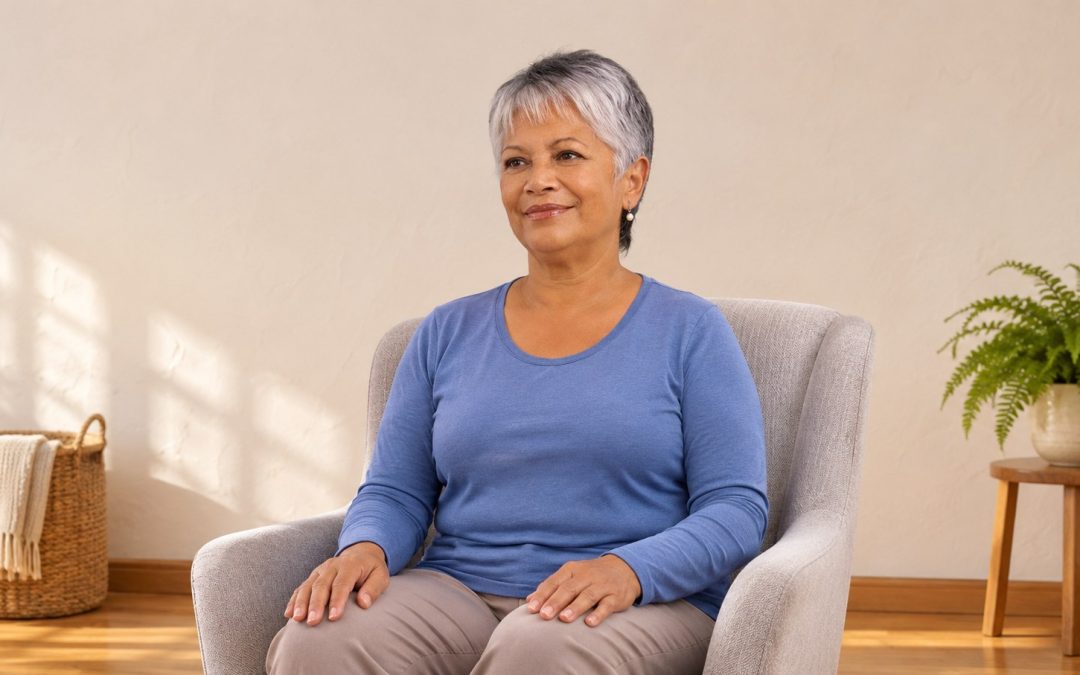
Meditation can be a way to practise attention, with or without a spiritual meaning that matters to you. You do not need a particular belief, an empty mind or an expensive setting to explore it.
The steps below offer a small starting point, not a promise of calm or relief from anxiety. You can adapt the practice, try something else or stop.
On this page
Choose a small amount of time that fits
Pick a moment when you do not need to drive, supervise a risky task or respond immediately to someone in your care. A brief pause may be more practical than trying to protect a long session.
You might begin with a minute or two. That is an optional starting length rather than a proven dose or a requirement. Decide in advance when you want to finish so that you do not have to keep checking a clock.
If a routine helps you remember, connect the pause to an existing part of your day. Missing a day does not erase previous practice or mean that you need to make up the time.
Make the setting comfortable and ordinary
Choose a position you can maintain comfortably. Sitting in a chair with your feet supported is an option; there is no need to sit cross-legged, hold a difficult pose or ignore pain.
Let the room be reasonably comfortable and accessible. Ordinary background sounds do not automatically make practice impossible. Keep your eyes open if that feels easier, perhaps resting your gaze on an object ahead.
Candles, incense, crystals or a specially decorated room are optional personal preferences, not requirements for meditation. Avoid adding anything that creates discomfort or a practical hazard in your setting.
Choose guidance with room for questions
You can practise on your own or use a short guided recording. Listen for clear instructions that let you adjust your posture, open your eyes or stop without being shamed.
If you choose an instructor or group, ask about their training, approach, costs and experience with the concerns you want to discuss. A reassuring title or an enthusiastic testimonial does not answer those questions.
Be cautious about promises to cure a condition, demands to stop other care or pressure to commit to an expensive course before you understand it. You can decline an approach that does not fit your needs or beliefs.
Let attention wander without making it a failure
Thoughts, sounds, planning and discomfort may draw your attention away. The task is not to prevent every thought or judge whether you are a sufficiently calm person.
When you notice your attention has moved, you can gently return to the focus you chose. You do not have to fight the thought, work out its meaning or keep returning indefinitely.
If a different focus feels easier, use it. Looking at a simple object or noticing contact with the chair may suit you better than paying close attention to breathing.

Try one short, flexible practice
Settle into a comfortable position and notice a point of contact, such as your feet on the floor or your back against the chair. Let your breathing remain natural; there is no need to hold it or force it deeper.
Choose one thing to notice for a few moments: a sound, an object in view or the ordinary movement of breathing if that is comfortable. When distracted, return gently or choose to finish.
At the end, look around the room and notice what you need next. You do not have to feel transformed. The useful question is whether you want to try that practice again, change it or leave it.
Pause or change the approach when needed
If you feel more distressed, frightened, detached or physically uncomfortable, stop the exercise. Move, look around, speak to someone or choose another ordinary activity that feels suitable.
You do not need to push through a difficult response to prove commitment. If a response persists or concerns you, discuss it with a qualified healthcare professional before trying again.
The National Center for Complementary and Integrative Health’s meditation guidance notes that negative experiences can occur and that safety has not been fully studied.
Keep other support and care available
A meditation practice does not have to carry the whole job of managing stress, anxiety or relationship difficulties. Practical help, connection, rest and appropriate professional care may also be relevant.
NCCIH advises against using meditation to replace conventional care or postpone help for a medical problem. If distress is interfering with everyday life, ask a qualified professional about support suited to your situation.
If meditation has a spiritual place in your life, you can keep that meaning without measuring your worth by the result of a session. Choose an approach that leaves room for your comfort, questions and other needs.
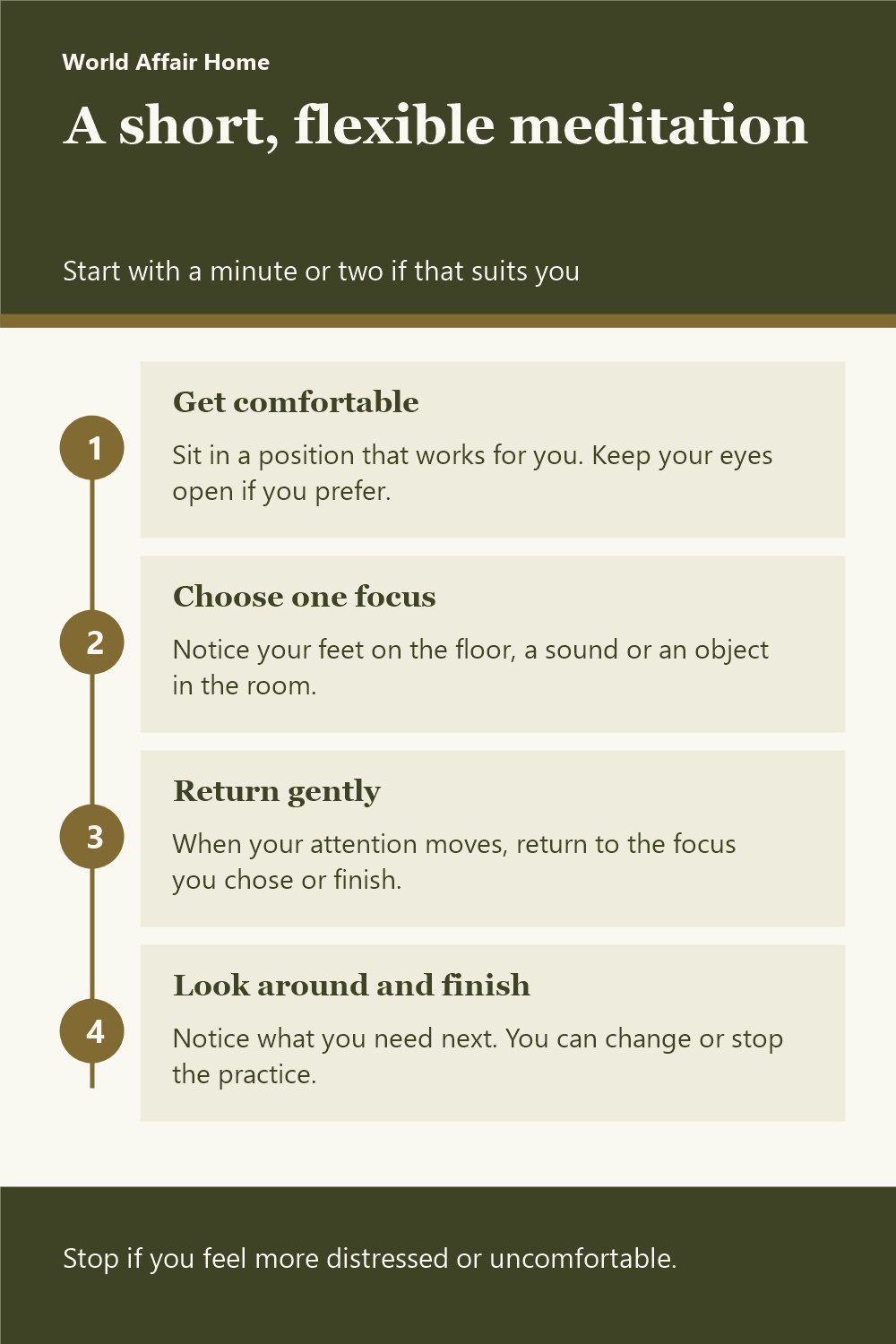
Read the infographic in text
A short, flexible meditation
- Get comfortable Sit in a position that works for you. Keep your eyes open if you prefer.
- Choose one focus Notice your feet on the floor, a sound or an object in the room.
- Return gently When your attention moves, return to the focus you chose or finish.
- Look around and finish Notice what you need next. You can change or stop the practice.
Stop if you feel more distressed or uncomfortable.