

Some people use “energy vampire” to describe a draining interaction, sometimes as part of their spiritual beliefs. Feeling depleted deserves attention, and it can have several causes. You can take your experience seriously while focusing on what happened and what support or change you need.
These steps offer choices for everyday relationships. You do not have to try all of them, stay positive through mistreatment or find a perfect explanation before setting a limit.
On this page
- Notice the part of the interaction that was difficult
- Check what else may be affecting your energy
- Choose the limit you need now
- Give the conversation a realistic time frame
- Be honest about the support you can offer
- Leave room between demanding activities
- Pause arguments that keep circling
- Set digital boundaries that fit your life
- Say what is changing in the conversation
- Make practical plans for unavoidable contact
- Ask for support without making someone else a buffer
- Choose a way to recover that feels grounding
- Review whether your limit is helping
- Seek more support when the strain continues
- Prioritize safety when limits bring fear or retaliation
1. Notice the part of the interaction that was difficult
Write down something observable: repeated interruptions, a long conversation when you needed rest, pressure to agree or a request you felt unable to decline. Your feelings are useful information, and naming the situation gives you a clearer starting point than deciding what kind of person someone is.
2. Check what else may be affecting your energy
Sleep, workload, caring responsibilities, stress and health can all affect how much social contact feels manageable. The NHS guidance on tiredness and fatigue describes several possible causes and when to seek medical advice. Consider the wider picture, especially if tiredness persists or affects daily life.
3. Choose the limit you need now
You might need a shorter conversation, fewer late-night messages, privacy or time to decide about a request. Choose one specific limit. The existing guide to setting boundaries when you are unsure how offers examples for finding the words.

4. Give the conversation a realistic time frame
Try, “I can talk for ten minutes before I need to leave,” or, “I have time tomorrow afternoon.” You can be warm and clear at the same time. If you have already reached your limit, you can end the conversation without offering another appointment immediately.
5. Be honest about the support you can offer
You can care about someone and have limited capacity. Ask whether they want listening, practical help or company, then say what you can offer. A person experiencing depression, grief or another difficulty deserves respect; their distress alone does not establish that they are trying to harm you.
6. Leave room between demanding activities
If you have control over your schedule, leave a small gap after a difficult meeting or visit. A drink of water, a quiet few minutes or a short walk may help you settle. Choose something accessible to you rather than creating another routine you feel obliged to complete.
7. Pause arguments that keep circling
You can say, “We are repeating ourselves, and I want to pause this conversation.” When appropriate, agree whether and when to return to the issue. You do not have to win agreement about every belief or defend a decision indefinitely before you can stop talking.
8. Set digital boundaries that fit your life
Consider notification settings, message windows and what you want to share publicly. Tell people when a delayed reply is normal for you. You are entitled to privacy, and harassment or unwanted contact is the responsibility of the person doing it, regardless of what you have posted.
9. Say what is changing in the conversation
Hinting through reduced eye contact or one-word answers can leave both people guessing. If it feels safe, use a direct sentence: “I need to change the subject,” or, “I’m going to head home now.” Cultural differences, disability and personal comfort can all affect how people communicate.
10. Make practical plans for unavoidable contact
With a colleague, co-parent or relative, complete avoidance may be difficult or unwanted. Consider shorter meetings, a written agenda or a channel for practical matters. Focus on the behaviour and the arrangements you need. Where relevant, an appropriate workplace or specialist adviser can help you explore options.
11. Ask for support without making someone else a buffer
A trusted friend might accompany you to an event or help you plan how to leave. Ask whether they are comfortable doing that and explain what would help. Avoid pulling other people into a difficult conversation simply to spread the strain around.
12. Choose a way to recover that feels grounding
Quiet, movement, music, prayer or meditation may be meaningful ways to pause. If you understand the experience in spiritual terms, you can make room for those beliefs while also attending to sleep, health and practical boundaries. No ritual or positive mood can guarantee protection from another person’s behaviour.
13. Review whether your limit is helping
After trying a change, ask whether the situation is more manageable. Are requests clearer? Do you have more room to rest or choose? You may need to adjust the arrangement or reduce contact further. You can revise a boundary without turning it into a test of your strength.
14. Seek more support when the strain continues
If exhaustion, anxiety, low mood or relationship stress keeps disrupting daily life, consider talking with an appropriate healthcare professional. NIMH’s psychotherapy guide explains what to ask when choosing a therapist. Support can help you explore your own needs without assigning a diagnosis to someone else.
15. Prioritize safety when limits bring fear or retaliation
Threats, stalking or controlling behaviour call for private support and practical safety planning. You do not have to confront someone to prove you can set a boundary. The Hotline’s technology-safety guidance can help you consider how to seek information if your device may be monitored. In immediate danger, contact local emergency services when it is safe to do so.
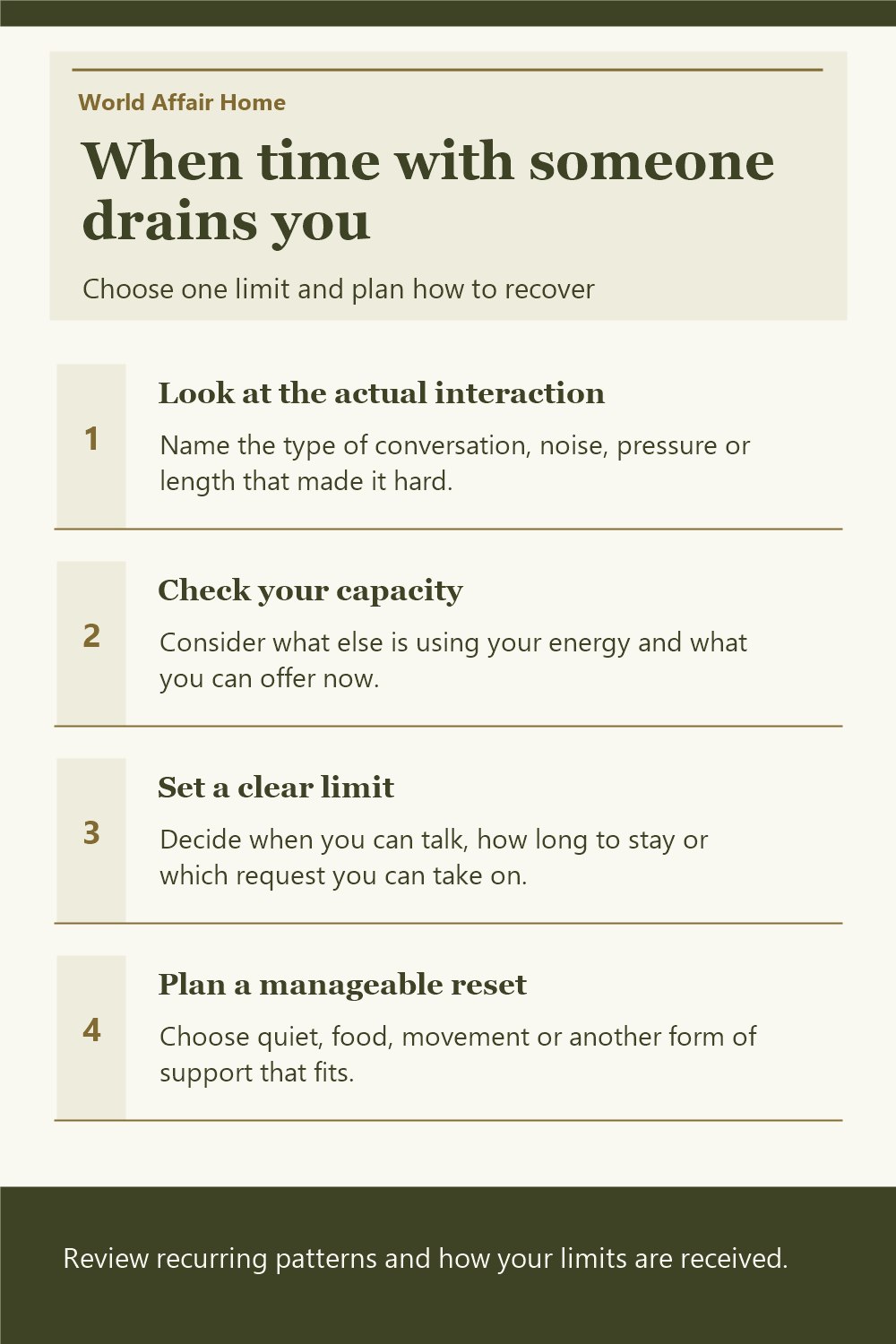
Read the infographic in text
When time with someone drains you
Choose one limit and plan how to recover
- Look at the actual interaction Name the type of conversation, noise, pressure or length that made it hard.
- Check your capacity Consider what else is using your energy and what you can offer now.
- Set a clear limit Decide when you can talk, how long to stay or which request you can take on.
- Plan a manageable reset Choose quiet, food, movement or another form of support that fits.
Review recurring patterns and how your limits are received.