

You can want a relationship and still want to keep your values, friendships and way of life. Dating does not require becoming someone else or accepting a connection that leaves important needs unmet.
A useful starting point is to know what matters to you, make room to learn about another person and notice whether the interest is mutual. You can adjust your approach without treating being chosen as a measure of your worth.
On this page
- Decide what you want to explore
- Separate core needs from flexible preferences
- Show interest without performing a role
- Reflect on past relationships at your own pace
- Make room for dating and for breaks
- Set limits around apps and messages
- Choose one practical next step
- Meet at a pace that keeps your choices open
Decide what you want to explore
Start with the kind of connection you are available for now: meeting people casually, a committed partnership, or simply learning whether you enjoy someone’s company. You can be unsure, but say so rather than promising what you cannot offer.
Make a short list of practical considerations, such as time, distance, children, accessibility, faith or future plans. A first date does not need to settle everything. It can help you decide whether another conversation is worthwhile.
Separate core needs from flexible preferences
Honesty, respect for a “no” and freedom to keep your friendships are different from a preferred haircut or hobby. Write two lists: what you need for a workable relationship, and what you enjoy but could be flexible about.
Compromise can be mutual and freely chosen. Giving up your privacy, identity or important life plans to keep someone interested deserves closer attention. You also do not have to justify declining a relationship that does not fit you.
Show interest without performing a role
Choose a few truthful details for your profile or first conversation. Mention an interest you actually enjoy and ask a question you genuinely want answered. You can dress up or feel nervous while still being honest about who you are.
For example: “I like quiet weekends and live music. Would you like to meet for coffee on Saturday?” Clear interest gives the other person room to respond. Deliberate jealousy, invented interests and a calculated chase make it harder to learn whether you suit each other.
Reflect on past relationships at your own pace
You might notice a pattern you want to change, such as agreeing to plans you do not want or avoiding questions about commitment. Choose one action you can take differently next time.
You do not owe an ex gratitude, forgiveness or renewed contact in order to date again. A painful or abusive experience is not a lesson you were required to endure. If reflection feels overwhelming, put it aside or talk privately with someone you trust.

Make room for dating and for breaks
Dating can be enjoyable, tiring, disappointing or a mix of all three. You do not need to love every part of it to make thoughtful choices. Being single is also a valid choice.
Decide what fits your current energy and schedule. One short meeting may be more manageable than several evenings of messaging. A break can be deliberate: pause the app, keep the friendships you value and reconsider when you want to.
Set limits around apps and messages
Try a manageable time window for browsing and replying instead of staying available all day. You can mute notifications, decline sexual messages and stop a conversation that repeatedly ignores your limits.
Online and in-person introductions both leave things to discover. A polished profile does not establish compatibility, and a quiet messaging style does not by itself establish disinterest. Look at what someone says, whether plans are followed through and how they respond to an ordinary boundary.
Choose one practical next step
Pick an introduction that suits you: an app, an interest group, a social event or an invitation through friends. Let friends know whether introductions are welcome rather than expecting them to arrange a match.
- Be clear: say what sort of connection you are looking for.
- Keep it manageable: suggest a specific, affordable activity with an easy end time.
- Protect your information: share personal details gradually; you do not owe someone your address, account access or financial help.
- Review the experience: ask whether you felt comfortable expressing preferences and whether interest seemed mutual.
Meet at a pace that keeps your choices open
If you choose to meet someone new, consider a public place, your own transport arrangements and letting a trusted person know your plan. These precautions cannot guarantee safety, and responsibility for harmful behaviour belongs to the person causing it.
Afterward, ask, “Would I like to see this person again?” rather than, “Was I impressive enough?” You may feel attraction without wanting the same future, or enjoy a conversation without romantic interest. You can say yes to another date, ask for more time or decline.
Love is respect’s guidance on boundaries offers a useful starting point for discussing needs and limits. Keeping your values does not guarantee a partner; it helps you make choices you can stand behind.
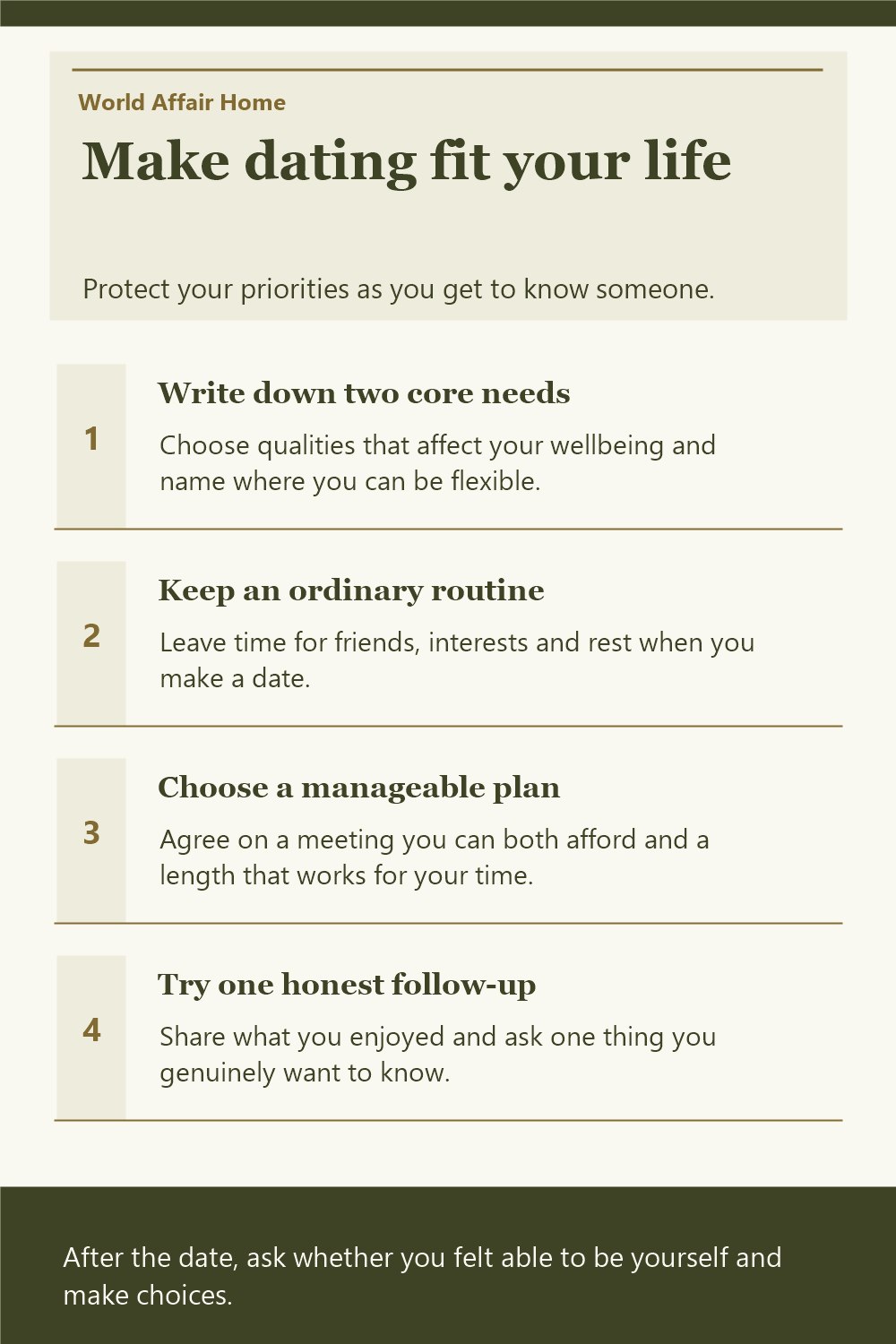
Read the infographic in text
Make dating fit your life
Protect your priorities as you get to know someone.
- Write down two core needs Choose qualities that affect your wellbeing and name where you can be flexible.
- Keep an ordinary routine Leave time for friends, interests and rest when you make a date.
- Choose a manageable plan Agree on a meeting you can both afford and a length that works for your time.
- Try one honest follow-up Share what you enjoyed and ask one thing you genuinely want to know.
After the date, ask whether you felt able to be yourself and make choices.