

After heartbreak, the idea of dating again may bring interest, hope, worry or a wish to avoid the whole subject. You may still miss parts of the old relationship while knowing that you do not want it back.
You do not have to be free of every difficult feeling before making a choice about dating. Start with what you want now, what you can realistically offer and the support that would help you keep your own pace.
On this page
- Acknowledge what you are carrying without judging it
- Decide whether dating is something you want now
- Choose a pace you can actually sustain
- Share the past selectively and with purpose
- Check present concerns against present behaviour
- Keep support wider than the new relationship
- Choose a manageable next step
Acknowledge what you are carrying without judging it
A breakup can affect routines, friendships, housing, plans and your sense of connection. There may be practical tasks to manage alongside sadness, anger, relief or uncertainty.
The NHS guidance on grief and loss includes the end of a relationship and explains that people’s responses differ. You do not have to move through feelings in a set order.
Remembering an ex or feeling hurt is not, by itself, evidence of emotional cheating. If you are worried about an agreement in a current relationship, discuss the actual behaviour and expectations rather than treating an unwanted thought as proof.
Decide whether dating is something you want now
Separate your own interest from pressure to show that you have moved on. You may want to meet someone, prefer companionship without romance or need a period without dating.
Ask what feels appealing and what feels difficult. For example, you might enjoy a short coffee date but not want frequent messaging or a committed relationship.
You can be honest about that without promising that your preferences will change soon. Another person may want something different; finding that out gives you both more room to choose.

Choose a pace you can actually sustain
Discuss contact and plans in concrete terms. “I would enjoy meeting again next week” gives more useful information than trying to appear completely available or deliberately distant.
Consider work, care, energy, money and any practical arrangements left from the breakup. A pace that fits those needs may differ from the other person’s preference.
Your past hurt does not create an obligation for someone to wait indefinitely. Equally, their interest does not mean you must move faster to keep them. You can discuss the difference and decide whether the arrangement works.
Share the past selectively and with purpose
You can explain a need without providing a detailed account of everything that happened. For example: “I prefer to make plans ahead,” or, “I am not ready to discuss that part of my previous relationship.”
If you want to share something personal, ask whether it is a suitable time. Consider what you want from the conversation: understanding, listening or help with a practical decision.
A new partner does not need passwords, old messages or intimate details about an ex to prove they care. You can keep information private while being honest about current commitments and circumstances that affect dating.
Check present concerns against present behaviour
If a delay or disagreement reminds you of past hurt, pause and identify what actually happened this time. A late reply alone does not establish deception or a lack of care.
Ask about a concrete pattern: “Our plans have changed at the last minute several times. Can we agree how to handle that?” Listen to the answer and notice whether an agreement is realistic and followed.
Do not dismiss a current concern just because you have been hurt before. Threats, pressure or repeated dishonesty deserve attention on their own terms. You can consider both your feelings and the available information.
Keep support wider than the new relationship
A caring partner can listen and respect your limits. They cannot be assigned the job of healing every past injury or become your only source of reassurance.
Consider friends, trusted family, community connections or qualified individual support where available. Ask for a specific kind of help, such as a short call, company or assistance with a practical task.
If distress is making everyday life hard, or what you are trying is not helping, ask a qualified healthcare professional or counsellor about support. Resources, costs and access differ; needing help is not a failure to be ready for love.
Choose a manageable next step
You might accept a short invitation, explain one boundary, ask what someone wants or take a break from dating. A small decision does not have to settle your whole future.
Notice whether the arrangement leaves room for your choices and the other person’s choices. You can appreciate affection without making promises before you are ready.
If you fear threats, coercion, stalking or monitoring, seek individual safety support before a confrontation or announcement. A useful next step may be finding support and practical information rather than starting a new relationship.
Read the infographic in text
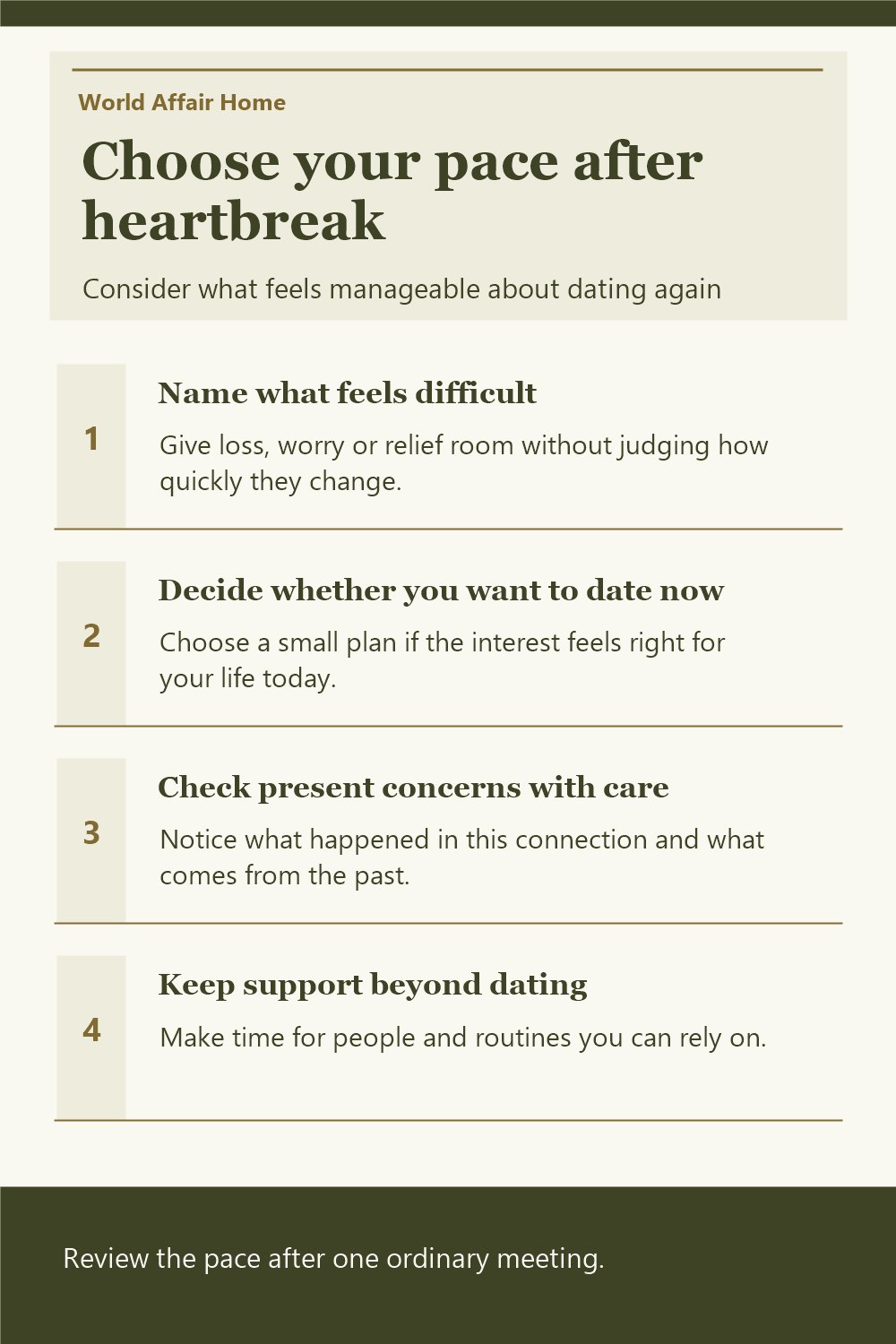
Choose your pace after heartbreak
Consider what feels manageable about dating again
- Name what feels difficult Give loss, worry or relief room without judging how quickly they change.
- Decide whether you want to date now Choose a small plan if the interest feels right for your life today.
- Check present concerns with care Notice what happened in this connection and what comes from the past.
- Keep support beyond dating Make time for people and routines you can rely on.
Review the pace after one ordinary meeting.