

Repeated messages, unwanted visits or demands to know where you are can be unsettling, especially when they are described as love or concern. You do not need to establish what is happening inside the other person’s mind before taking the behaviour and its effect on you seriously.
Focus on what they do, whether contact is welcome and whether you feel free to make ordinary choices. A label such as “obsessed” cannot tell you how a situation will develop or replace individual support.
On this page
Look at behaviour and its impact
Enjoying time together is different from preventing you from seeing friends, working or having privacy. Consider specific incidents: a partner repeatedly interrupts your work after being asked to wait, punishes you for visiting family or insists that you report every movement.
Compliments, eagerness to please or calling you a role model do not diagnose a disorder. Neither do they tell you whether a person is safe. Pay attention to actual pressure, threats and restrictions instead of trying to explain them through a mental-health label.
Someone may call you a soulmate or believe your connection has spiritual significance. That belief does not create a right to your time, attention or commitment. Your choice still matters, including a choice to slow down or end contact.
You can disagree with someone who cares about you. Notice whether there is room for different preferences without punishment. You do not have to find a hidden diagnosis before deciding an arrangement does not work for you.
Distinguish contact from monitoring
Message frequency alone does not settle the issue. What matters includes whether the contact is wanted, whether reasonable delays are accepted and whether you can decline. Repeated accusations or demands for immediate replies deserve attention even if the messages contain affectionate words.
Reading private messages, tracking a device or demanding passwords is different from asking how your day went. If you think your devices or accounts are monitored, consider using a safer device to seek advice. Changes to access can sometimes increase risk, so discuss options with a specialist rather than assuming one technical step will solve the problem.
Notice how refusals are treated
A person can feel disappointed by a refusal and still respect it. Repeated bargaining, intimidation, threats or turning up after being told not to are behaviours to take seriously. You do not owe repeated explanations until the other person agrees.
If you feel safe, you may choose a short limit such as: “I don’t want further personal contact.” If you are afraid of the response, do not make confrontation a requirement. Individual support can help you consider whether, when and how to communicate.
It is not your responsibility to make yourself more persuasive, kinder or more available to prevent another person’s threatening behaviour. If there is immediate danger, contact local emergency services when you can do so safely.
Take self-harm threats seriously
Never assume that a threat of suicide or self-harm will not be acted on. Seek emergency help for immediate danger, or contact an appropriate crisis service for guidance. You do not have to assess and manage the situation alone.
You can care about someone’s welfare without agreeing to stay in a relationship or meet privately. The National Domestic Violence Hotline’s guidance on a partner’s threats of suicide explains that these threats can also be used to pressure a partner. Involving appropriate help is different from bargaining with your own safety or freedom.

Seek support for stalking and safer choices
Repeated unwanted visits, following, surveillance or contact through new accounts can raise stalking concerns. Gifts and apologies do not make unwanted contact welcome. Consider the pattern and how it affects your ability to go about your life.
The Hotline’s stalking safety-planning guidance discusses individual planning, support and keeping records. If it is safe, preserve relevant messages and a factual record of incidents somewhere the other person cannot access. An advocate can help you consider contact, documentation and practical needs.
Local victim-support services or legal advocates can explain options where you live. Do not assume a protective order, blocking an account or leaving immediately will remove every risk. The right plan depends on your circumstances, and you can seek help while deciding what is possible.
You do not need to wait for physical harm or certainty about a label to ask for support. Start with what you have noticed and what feels difficult or unsafe now.
Read the infographic in text
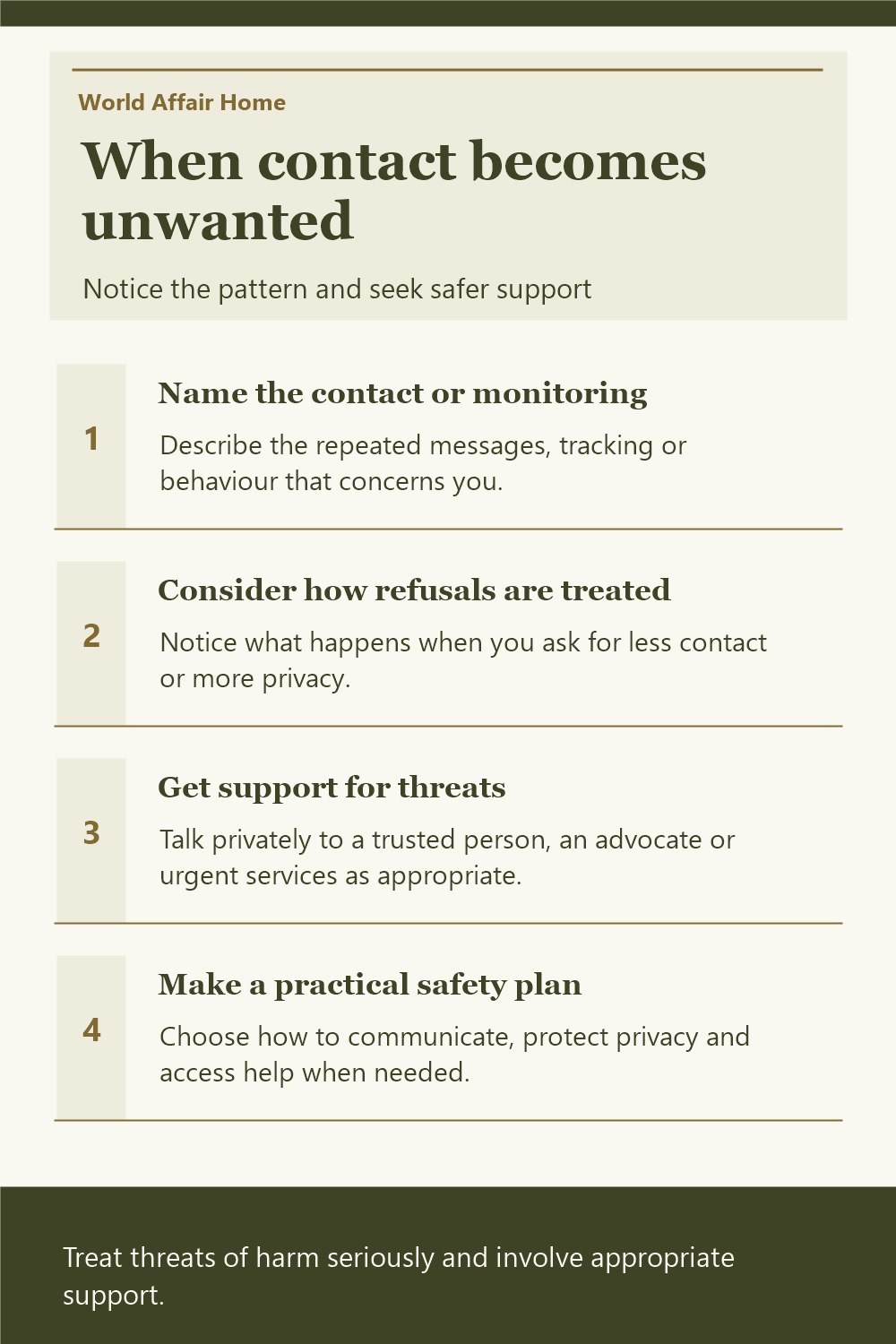
When contact becomes unwanted
Notice the pattern and seek safer support
- Name the contact or monitoring Describe the repeated messages, tracking or behaviour that concerns you.
- Consider how refusals are treated Notice what happens when you ask for less contact or more privacy.
- Get support for threats Talk privately to a trusted person, an advocate or urgent services as appropriate.
- Make a practical safety plan Choose how to communicate, protect privacy and access help when needed.
Treat threats of harm seriously and involve appropriate support.