

When you care about someone, it is natural to wonder whether they feel the same. Affection can show up in everyday behaviour, but no gesture can prove what another person feels. Eye contact, a family introduction or a generous favour can have different meanings in different relationships.
These nine observations can help you reflect on care and respect over time. Use them to prepare an honest conversation, rather than to score a partner or test their love. Your needs and choices matter alongside whatever feelings the other person may have.
On this page
Attention and personal space
-
They listen in ways that work for both of you. Notice whether they make an effort to understand, ask when something is unclear and remember matters important to you. Eye contact is not a reliable test of love. People differ in how they show attention, including because of culture, disability or personal comfort. You can ask what helps each of you feel heard.
-
They respect time apart. You can keep friendships, interests and private time without being pressured to prove your loyalty. Discuss contact preferences rather than assuming that frequent messages mean more affection. A person can miss you and still accept that you are busy or want an evening to yourself.

Care in practical situations
-
They offer support they can realistically give. Perhaps they bring a meal when you are unwell, listen after a difficult day or help you organise an urgent task. Useful care takes account of what you actually need. Someone’s work, health, finances or caregiving duties may limit their availability; cancelling every other responsibility is not the measure of their feelings.
-
They follow through or explain a change. Look for a pattern of keeping agreements and communicating when plans become unworkable. If they cannot help, can they tell you clearly rather than leaving you waiting? Consistency matters more than a single impressive gesture. You can also ask for a different arrangement when the current one is unreliable.
Respect and partnership
-
They treat you with dignity. Affection should leave room for disagreement, preferences and limits. Notice whether you can say no without humiliation, threats or punishment. A partner may encourage you, but they cannot be responsible for making you feel confident all the time. Their treatment of you is something you can assess without making your self-worth depend on their approval.
-
They include your perspective in shared decisions. Decisions about your home, money, time or relationship agreements deserve your input. Asking for your view is meaningful when there is also willingness to listen and negotiate. Neither person has to seek permission for every independent choice. The question is whether choices affecting both of you are handled fairly.
Connection at your own pace
-
They show curiosity about your everyday life. This might be a conversation about your day, sharing something you enjoy or remembering a concern you mentioned. People have different energy levels and communication styles, so discuss what connection looks like for you. Curiosity is different from demanding constant updates or checking private messages.
-
They discuss how you fit into their wider life. Meeting friends or family may matter to you, but timing can involve distance, cultural expectations, estrangement, privacy or safety. An introduction is not proof of commitment, and a delay does not explain itself. Ask what the arrangement means and whether their answer fits the relationship you want.
Honest conversations about feelings
-
They are willing to talk about the relationship. Some people need time or a different setting to express themselves. You can invite a conversation without demanding a particular answer: “I care about you and would like to understand what this relationship means to you.” Listen to what they say, including uncertainty or a different level of commitment. You do not have to keep guessing indefinitely.
The NHS guidance on healthy relationships highlights communication, listening and boundaries. Those practices can help you understand one another, but they cannot establish someone else’s feelings for them.
Consider the overall pattern alongside direct conversations. Are your needs taken seriously? Do words and behaviour broadly fit? If something remains unclear, ask about one specific issue and decide what you need next. You are allowed to want clarity or to leave a relationship that does not work for you, even if the other person says they love you.
If affection is mixed with fear, control or threats, prioritise private support and your safety. Caring moments do not cancel harmful behaviour. Talk with someone you trust or a local domestic abuse service if you are worried about how a partner may react.
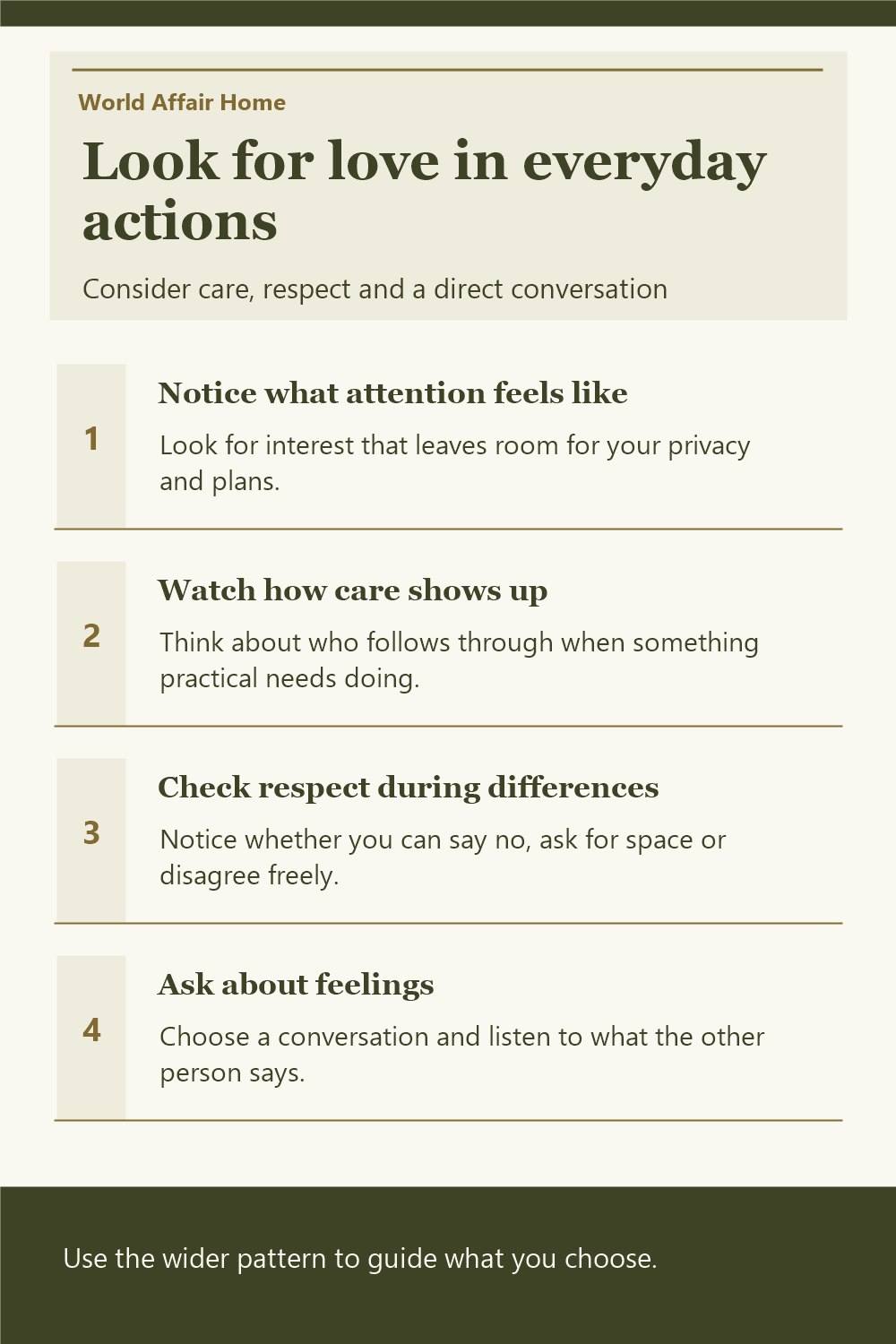
Read the infographic in text
Look for love in everyday actions
Consider care, respect and a direct conversation
- Notice what attention feels like Look for interest that leaves room for your privacy and plans.
- Watch how care shows up Think about who follows through when something practical needs doing.
- Check respect during differences Notice whether you can say no, ask for space or disagree freely.
- Ask about feelings Choose a conversation and listen to what the other person says.
Use the wider pattern to guide what you choose.